How to Tell If You're
Gaining Muscle or FatWithout Trusting the Scale
How to tell if you're gaining muscle or fat after you start lifting: why the scale goes up, how accurate body fat scales are, and a simple 4-week check-in.
 By Wellio
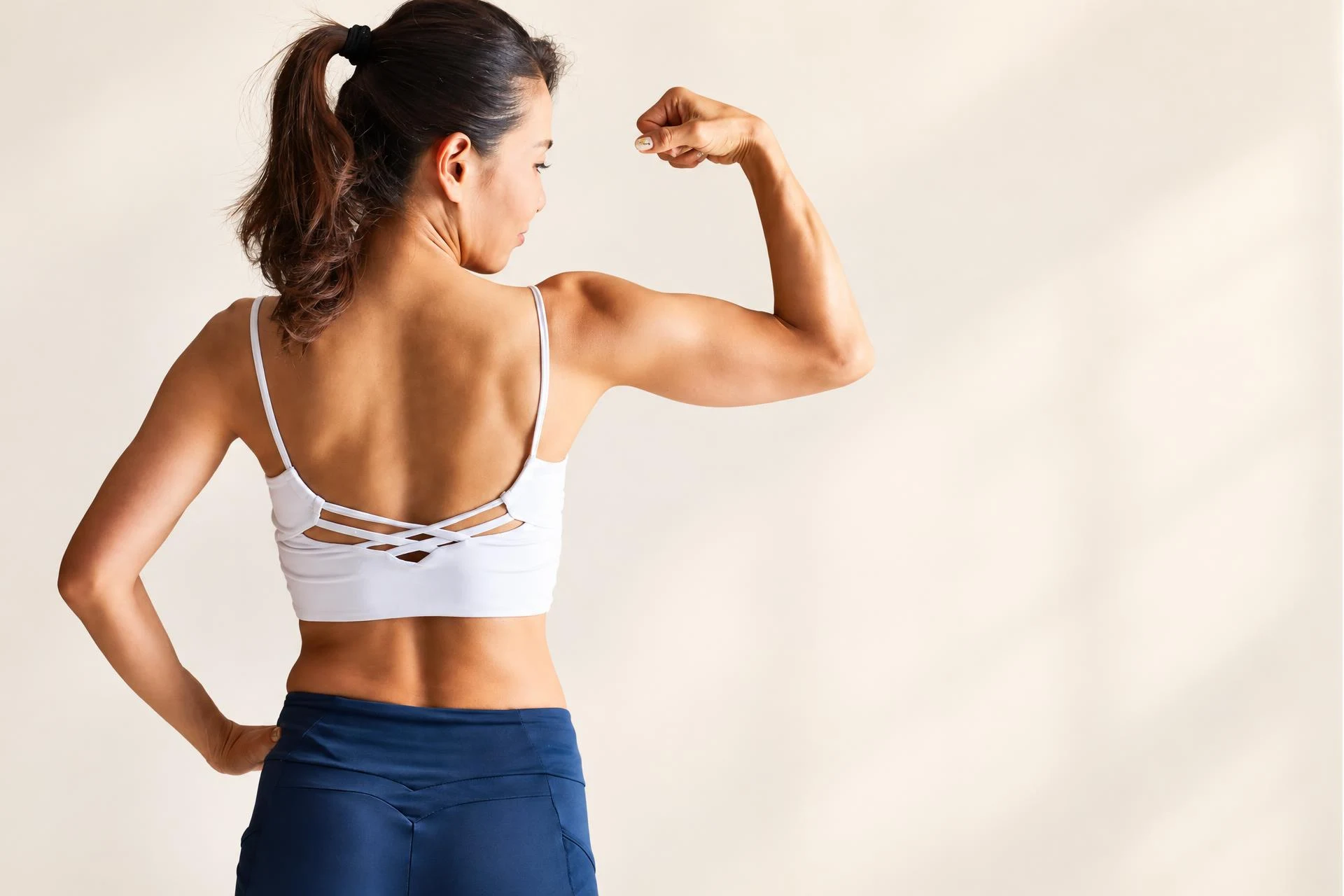
You started lifting a few weeks ago. You're showing up, you're getting stronger, and then you step on the scale and it's up two or three pounds. The obvious worry follows: "Am I gaining fat? Is lifting making me bigger in the wrong way?"
It's one of the most common moments when women quit, and it's usually a misunderstanding. The scale measures everything you're carrying, and in the first weeks of training, a lot of that change is water moving into your muscles. Some of it may be muscle. Some may be food or the time of your cycle. Very little of it, in most cases, is new fat.
We looked at the research on what makes the scale move after you start training, how accurate home body fat scales and lab scans actually are, and how waist measurements are taken in clinical guidance. Below you'll find why the scale goes up, what each measurement tool can and can't tell you, the signals that actually separate muscle from fat, a simple 4-week check-in, and when a weight change is worth a doctor's visit.
Why the scale goes up when you start lifting
Your muscles store more water with glycogen
Glycogen is the stored form of carbohydrate in your muscles and liver. It doesn't sit there dry. A 2015 study in the European Journal of Applied Physiology by Fernández-Elías and colleagues supported the long-held estimate that each gram of muscle glycogen is stored with at least 3 grams of water. When you start training regularly and eat enough carbohydrate, your muscles top up their glycogen, and the water comes with it.
Training increases water inside your muscle cells
A 2014 study in the European Journal of Sport Science followed 30 men and 34 women through 16 weeks of progressive resistance training, three times a week. Water inside the cells rose by about 11% in the women (and about 8% in the men), total body water rose by about 7.6%, and skeletal muscle mass increased by about 3.9% in the women. Changes were similar for both sexes.
That's normal, healthy adaptation. It just shows up on the scale before it shows up in the mirror.
Daily ups and downs are bigger than you think
A classic 1965 study in the British Journal of Nutrition by Robinson and Watson weighed 28 young women every morning for 68 days. The average day-to-day change was about 0.3 kg (roughly 0.6 lb), but each woman's biggest single-day swing ranged from about 0.6 to 2.1 kg (1.3 to 4.6 lb). Weight also followed a pattern with the menstrual cycle: it tended to rise before a period and peak around the second day of bleeding, then fall back.
So a 2 lb jump between Tuesday and Thursday tells you almost nothing about fat.
Other common causes
- More food overall, especially if training made you hungrier. The food in your gut has weight until it's digested.
- Salty meals can make you hold more water for a day or two.
- Muscle repair after a hard session often comes with temporary fluid in the worked muscles. (We cover soreness separately.)
How to tell if you're gaining muscle or fat: what each tool can tell you
Different tools measure different things. This block compares them honestly, including their limits.
| Tool | What it measures | Good for | Main limitation |
|---|---|---|---|
| Bathroom scale | Total weight | Long-term trends (weeks to months) | Can't separate muscle, fat, water or food |
| Smart scale (bioimpedance) | Estimates body fat from electrical resistance | Rough trends if used the same way each time | Large error for any one person |
| Tape measure (waist, hips) | Size at specific points | Showing fat changes around the middle | Needs the same spot and technique each time |
| Strength log | What you lift, for how many reps | Showing muscle and strength gains | Indirect: doesn't measure tissue |
| DXA scan | Fat, lean and bone mass by region | The most detailed common method | Cost, access, and its own measurement error |
| Clothes fit and photos | How your body looks and feels | Real-life change | Subjective, lighting and timing matter |
How accurate are body fat scales?
Home smart scales use bioelectrical impedance analysis (BIA): they send a small current through your body and estimate fat from how easily it passes. A 2026 systematic review in the Journal of Functional Morphology and Kinesiology by Oliver and colleagues compared BIA devices with a four-compartment model, one of the most accurate reference methods, across 12 studies in healthy adults.
The average error was fairly small (from about −3.5 to +4.4 body fat percentage points across studies). But the range of error for any one person was wide, typically spanning 15 to 20 percentage points. The authors concluded BIA was acceptable for describing groups of people, but not for individual assessment. Most of the devices studied were research or clinical models, not cheap home scales, so home scales are unlikely to do better.
What this means for you: a smart scale might say 28% one week and 26% the next without anything real changing. If you use one, look only at the long-term trend, measure under the same conditions every time, and never treat the number as precise.
What about DXA scans?
DXA (dual-energy X-ray absorptiometry) is one of the most detailed methods most people can access. It estimates fat, lean tissue and bone, and shows where they're located. It still has measurement error, and a 2014 study in the Journal of Clinical Densitometry found that the smallest real change it can detect varies by sex, body region, tissue type and body size. If you get repeat scans, keep the conditions as similar as possible (same time of day, similar food and fluid beforehand) so the comparison is fair; this is common practical advice rather than a single fixed rule.
For most people, a DXA scan is optional. The free tools below, used consistently, answer the muscle-or-fat question well enough.
The signals that actually separate muscle from fat
1. Your strength log
If your weights and reps are going up week after week, you're building strength, and over a few months, muscle. Early strength gains come mostly from your nervous system getting better at the movement (we explain the timeline in our guide to how long it takes to see results from lifting), but steady progress over 8 to 12 weeks is one of the clearest signs your training is building muscle.
2. Your waist measurement
Fat gain tends to show up around the middle; muscle gain from a typical lifting plan mostly shows up in the legs, glutes, back, shoulders and arms. That makes waist size one of the most useful fat signals.
How to measure it, based on the American Heart Association's clinical guidance:
- Find the top of your hip bone on each side.
- Wrap the tape around your waist at that level, keeping it horizontal and parallel to the floor.
- Make it snug, but don't press into the skin.
- Breathe out normally and read the tape at the end of the breath.
Measure first thing in the morning, before eating, at the same point in your cycle each month if you can. You can also measure your hips at the widest point of your glutes. What matters most is using the same spot and method every time.
3. How your clothes fit
Jeans that fit the same at the waist but feel snugger at the thighs or glutes usually point to muscle. Pants that feel tighter at the waist over several weeks are more likely to reflect fat gain, or a bloated week. Look at the pattern over a month, not one day.
4. Photos (optional)
Some people find monthly photos helpful; others find them stressful. If you take them, use the same lighting, time of day and pose. Skip them entirely if they make you feel worse; the other signals are enough.
Reading the patterns together
These combinations are practical interpretations, not diagnostic rules.
| What you see over 4 weeks | Most likely explanation |
|---|---|
| Lifts going up, waist steady, scale up 1 to 3 lb | Muscle, water stored with glycogen, or both |
| Lifts going up, waist down, scale steady | Body recomposition: losing fat and gaining muscle |
| Lifts flat, waist up, scale up steadily | More likely fat gain; look at food, sleep and training |
| Lifts going up, waist up slightly, scale up steadily | Some muscle plus some fat; often fine if building is your goal |
| Big jump in a few days, waist and lifts unchanged | Water, salt, food or your cycle |
If you're losing fat and building muscle at the same time, the scale may barely move at all. We explain how that works in our guide to body recomposition.
A simple 4-week check-in
Every session
- Log your main lifts: exercise, weight, sets and reps.
Once a week (optional)
- Weigh yourself on the same day, first thing in the morning, after the bathroom and before eating. Write it down, but don't react to it.
- If you prefer, weigh daily and look only at the weekly average. Either works; the habit matters more than the frequency.
Every 4 weeks
- Compare your strength log with four weeks ago. Are your main lifts up in weight or reps?
- Measure your waist and hips using the method above.
- Compare your weekly weights or averages, not single days.
- Note how your clothes fit and how your energy and sleep have been.
- Read the pattern using the table above, and decide whether anything needs to change.
For women with a menstrual cycle, comparing measurements at the same point in the cycle each month gives a fairer picture, since weight and bloating can shift across the month. We cover why appetite and weight often rise before a period in why am I so hungry before my period.
When weight change deserves a doctor's visit
Most weight changes after starting a training plan are normal. Some aren't, and they have nothing to do with lifting. According to Mayo Clinic, see a healthcare professional if you notice:
- Swelling or puffiness under the skin, often in the legs or arms, stretched or shiny skin, or a dent that stays for a few seconds after pressing the skin
- Swelling in your belly that makes it larger than usual
- Leg pain and swelling that doesn't go away, especially in one leg, which can be a sign of a blood clot
Get emergency care for shortness of breath, chest pain or an irregular heartbeat along with swelling.
It's also worth checking with a doctor if your weight is rising quickly without changes in what you eat or do, or if it comes with other new symptoms like unusual tiredness, feeling cold or changes in your period. A doctor can look at possible causes such as thyroid problems, medications or other conditions.
Put it together: your week
Here's how to connect training, food, sleep and the numbers so they don't mislead you.
- Training: Keep a consistent plan and log every session. Your log is your best evidence of muscle gain. If you're not sure you're working hard enough to grow, see how to know if you're lifting heavy enough.
- Food: Eat enough, with protein at each meal. Under-eating to "keep the scale down" often stalls strength and makes recovery harder. Expect weight to sit slightly higher when you're training and eating well; that's often stored glycogen and water doing their job.
- Sleep and energy: Poor sleep and stressful weeks can increase water retention and appetite and make sessions feel harder. Note them in your log so a strange week makes sense later.
- Your cycle: If you have one, expect a higher number in the days before and early in your period. Compare measurements at the same point each month.
A sample week: lift Monday, Wednesday and Friday and log each session; weigh in Saturday morning if you choose; do your monthly check-in on the first Saturday of the month, waist and hips plus a quick look back at your log.
Frequently asked questions
Why am I gaining weight after I started lifting?
Usually because your muscles are storing more glycogen and water, and training increases the water inside muscle cells. A 16-week study found intracellular water rose about 11% in women who lifted three times a week. Normal daily swings, more food and your menstrual cycle can add to it.
How do I know if I'm gaining muscle or fat?
Look at several signals together over about four weeks. If your lifts are going up and your waist measurement is steady or smaller, you're most likely gaining muscle. If your waist grows steadily while your lifts stall, fat gain is more likely.
Are smart scales accurate for body fat?
Not for individual readings. A 2026 systematic review found bioimpedance devices were reasonably accurate on average for groups, but individual errors often spanned 15 to 20 percentage points. If you use one, watch only the long-term trend under the same conditions.
How much does weight fluctuate in a day?
More than most people expect. In a study that weighed young women daily, the average day-to-day change was about 0.6 lb, but each woman's biggest single-day swing ranged from about 1.3 to 4.6 lb.
How long does water weight from lifting last?
Some of it isn't temporary: muscles that train regularly keep more stored glycogen and water as part of normal adaptation. Short-term bumps from a salty meal or a hard session usually settle within a few days.
Should I stop lifting if the scale goes up?
No. An early rise on the scale is a normal part of starting to train. Judge your progress by your strength log, waist measurement and how your clothes fit over a month, not by the scale in the first few weeks.
Conclusion
So how do you tell if you're gaining muscle or fat? Not from the scale alone. In the first weeks of lifting, much of the change is water stored with glycogen and inside your muscles, plus normal daily swings and your cycle. Home body fat scales are too imprecise to settle it, and even lab scans have limits.
What works is simple and free: log your lifts, measure your waist and hips once a month, notice how your clothes fit, and read the trend over four weeks. If you're getting stronger and your waist is steady, you're building muscle. Keep going.
This article is for general education and isn't medical advice.
If you want help putting this into your own week, Wellio is an AI coach that sees the whole picture: it builds your plan around your workouts, meals, sleep and energy, and guides you day by day as life changes. Log your sets and meals, let Apple Health bring in your weight, and see the trend next to your training instead of reacting to a single weigh-in. Join the Wellio waitlist.
Sources
- Fernández-Elías VE, Ortega JF, Nelson RK, et al. Relationship between muscle water and glycogen recovery after prolonged exercise in the heat in humans. European Journal of Applied Physiology, 2015dx.doi.org
- Resistance training promotes increase in intracellular hydration in men and women. European Journal of Sport Science, 2014pubmed.ncbi.nlm.nih.gov
- Robinson MF, Watson PE. Day-to-day variations in body-weight of young women. British Journal of Nutrition, 1965core-prod.cambridgecore.org
- Oliver CJ, Del Vecchio L, Minehan M, Climstein M, Rosic N, Myers S, Tinsley G. The Validity of Bioelectrical Impedance Analysis Compared to a Four-Compartment Model in Healthy Adults: A Systematic Review. Journal of Functional Morphology and Kinesiology, 2026mdpi-res.com
- Dual-energy X-ray absorptiometry measured regional body composition least significant change: effect of region of interest and gender in athletes. Journal of Clinical Densitometry, 2014lida.sport-iat.de
- American Heart Association. Measuring Waist Circumference (clinician guide), 2026professional.heart.org
- Mayo Clinic. Edema: symptoms and causesmayoclinic.org
Make it work
for your week.