How Long to See
Results From Lifting?A Research-Based Timeline
Three weeks in and nothing looks different? Here's when strength, muscle and visible change usually show up, and better ways to see that it's working.
 By Wellio
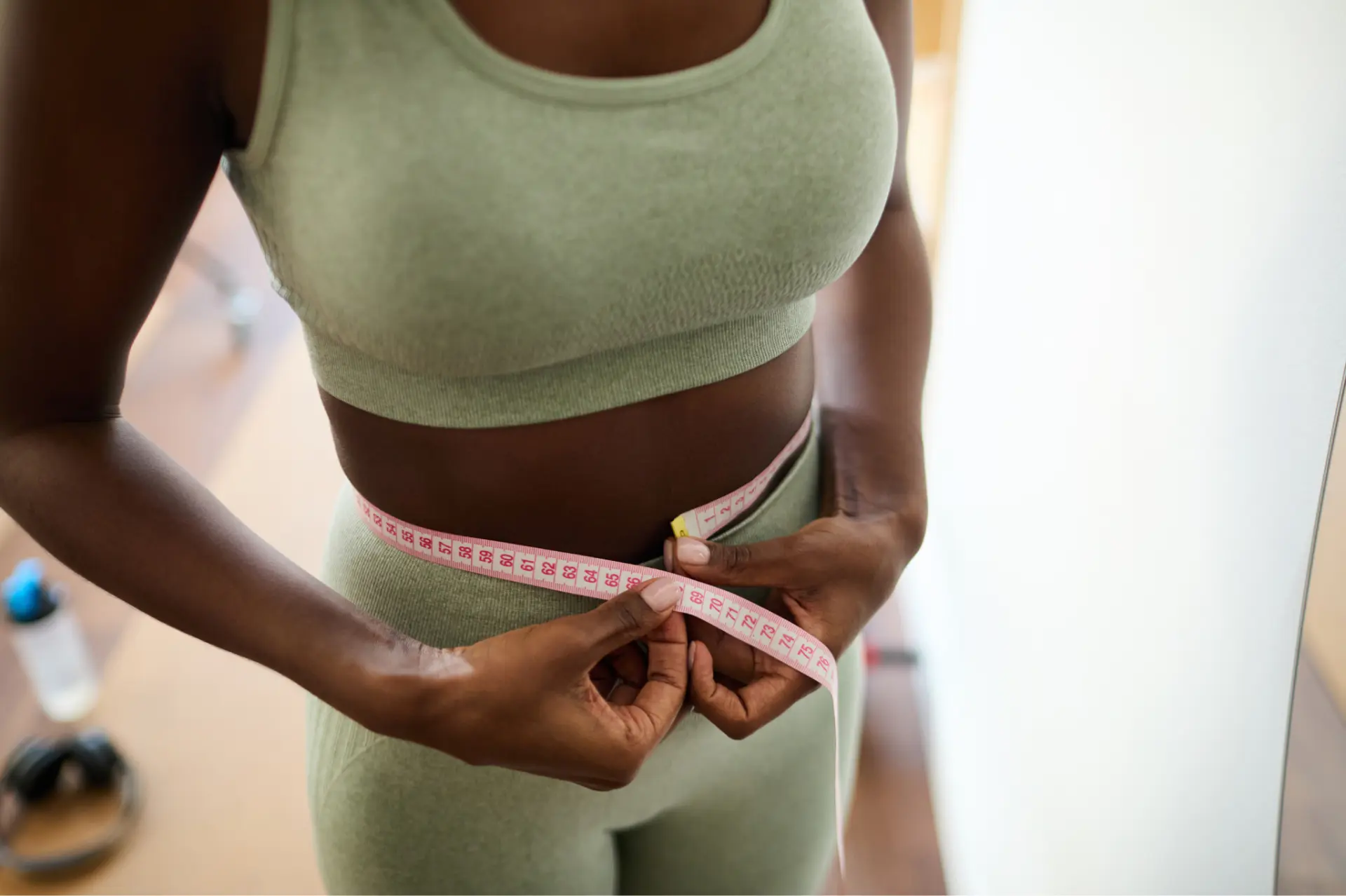
You've been lifting for three weeks. You're showing up, you're sore, you're tired, and when you look in the mirror, nothing seems different. The scale might even have gone up. It's easy to wonder whether it's working, or whether you're doing something wrong.
Here's the thing most fitness content skips: "results" isn't one thing. Getting stronger, building muscle, and seeing a visible change in your body happen on different timelines, and the first one starts much sooner than the last. If you only look for the last one, you'll miss the evidence that it's working.
We dug into the research on how fast strength and muscle change in beginners, including studies that measured muscle size every few weeks, reviews of how the nervous system adapts to training, and recent work on whether women build muscle at a different rate than men. Below you'll find a realistic timeline, why the scale can be misleading, better ways to track progress, and what speeds results up or slows them down. We'll also be honest about where the research can't give you a precise number.
How long does it take to see results from lifting weights? Three different timelines
This section sets up the idea that runs through the rest of the article: different results show up at different speeds.
| Type of result | When it usually starts | How you notice it |
|---|---|---|
| Strength and skill | First 2 to 4 weeks | Weights feel easier, you can lift more, movements feel smoother |
| Muscle growth (on scans) | Roughly 3 to 10 weeks | Measured with ultrasound or MRI in studies; usually not visible yet |
| Visible change | Often a few months or more | Clothes fit differently, measurements change, you notice shape changes |
These are ranges from research and common experience, not guarantees. They vary with your starting point, how consistent you are, how hard your sets are, how much you eat and sleep, and genetics.
Weeks 1 to 4: why you get stronger before you get bigger
This is the phase where most beginners see the fastest change, and it's mostly happening in your brain and nerves.
A 2021 review in the European Journal of Applied Physiology by Škarabot and colleagues summarized what's known about neural adaptations to resistance training. The early increases in strength, roughly in the first 2 to 4 weeks, are thought to be mainly neural. Evidence for this includes strength going up more than muscle size, strength gains that are specific to the exact exercise you trained, and better ability to activate your muscles.
In plain language: your brain is learning the movement. You recruit more of your muscle, coordinate better, and stop wasting effort. That's why your goblet squat can feel dramatically easier by week three, even though your legs haven't visibly changed.
The review is also honest about the limits: scientists still aren't sure exactly where in the nervous system these changes happen. But the overall pattern, faster strength gains early, is well established.
What you'll notice
- Movements feel more stable and natural
- You can use heavier weights or do more reps
- Soreness after the same workout gets milder
- You need fewer cues to remember how to do an exercise
Weeks 3 to 10: when muscle starts to grow
This section covers how soon muscle size actually changes, and why early measurements can be tricky.
Muscle growth can start within a few weeks
A 2007 study in the Journal of Applied Physiology by Seynnes and colleagues had seven young adults do high-intensity leg training three times a week for 35 days. Quadriceps size increased measurably after about 20 days (3 weeks), and by day 35 it was up about 6.5 to 7.4% depending on the region measured. Changes in the muscle's structure appeared even earlier, around day 10.
But early "growth" isn't all muscle
A 2016 study in the European Journal of Applied Physiology by Damas and colleagues followed 10 untrained young men through 10 weeks of training, measuring muscle size at week 3 and week 10. At week 3, muscle size was up about 2.7%, but measurements showed signs of swelling from muscle damage. By week 10, muscle size was up about 10.4%, and the signs of swelling had settled. The authors concluded that early increases in muscle size are not purely muscle growth and shouldn't be labeled as such without checking for swelling.
What this means for you
- Some muscle growth likely starts within the first month, but it's small.
- Early "pump" or fuller feeling muscles can partly be temporary swelling, which settles as your body adapts.
- Both studies were small, short and mostly in men, so treat the exact timings as a rough guide.
Do women build muscle and strength at the same rate as men?
A common worry is that women build muscle so slowly that lifting "doesn't work" for them. The research says otherwise.
A 2025 meta-analysis in PeerJ by Refalo and colleagues pooled 29 studies comparing muscle growth in men and women doing resistance training. Men gained slightly more muscle in absolute terms (more total size added), but relative gains were similar: compared with their starting point, women grew muscle at about the same rate. The authors concluded that women have a similar potential to build muscle as men.
For strength, a 2020 meta-analysis by Roberts and colleagues (summarized by Stronger By Science) found women made greater relative gains in upper-body strength than men, with comparable relative gains in the lower body. One likely reason: many women start with less upper-body training, so there's more room to improve quickly.
What about a specific rate of muscle gain?
You'll see online claims like "women can gain X pounds of muscle per month." We couldn't find solid research that supports a reliable number. Gains vary a lot with genetics, training history, effort, food and sleep, and most studies measure muscle size in a single muscle rather than total pounds. So we won't give you a figure we can't back up.
A realistic strength gains timeline for beginners
Strength is the easiest result to measure, so here's what studies of beginners show.
In a 2019 study in the Journal of Strength and Conditioning Research by Dinyer and colleagues, 23 untrained women trained to failure with either light or heavy weights for 12 weeks. Strength increased by about 17% to 32% depending on the exercise:
| Exercise | Strength increase over 12 weeks |
|---|---|
| Leg extension | About 32% |
| Lat pulldown | About 25% |
| Leg curl | About 23% |
| Seated military press | About 17% |
Interestingly, total lean mass didn't change significantly over those 12 weeks. That's a useful reminder: you can get much stronger before body composition measurements catch up.
A rough timeline
These phases combine the research above with common coaching experience. Use them as expectations, not deadlines.
| Time training consistently | What's typical |
|---|---|
| Weeks 1 to 2 | Learning movements; weights may go up quickly as technique improves |
| Weeks 4 to 8 | Clear strength gains; workouts that felt hard now feel manageable |
| Week 12 and beyond | Steady, slower strength gains; muscle growth is building |
| 6 months and beyond | Noticeable changes in strength, shape and how clothes fit for many people |
Why the scale isn't moving (or is going up)
This is one of the most common reasons people quit lifting in the first month. Here's why the scale can mislead you.
- Muscle growth and fat loss can cancel out on the scale. If you gain a little muscle and lose a little fat, your weight may barely change while your body does.
- Your muscles hold more water when you start training. New training often comes with temporary fluid shifts, including the swelling seen in early muscle-size studies.
- Normal daily fluctuations are large. Food, salt, hydration and, for many women, the menstrual cycle can move the scale up or down from one day to the next.
- Body composition changes slowly. In the 12-week study above, women got much stronger without a significant change in lean mass.
If your goal includes fat loss, food and daily activity matter more than training alone. Lifting helps you keep and build muscle while that happens.
Better ways to track your progress
If the scale and mirror lag behind, what should you watch? This section lists the measures that show progress earliest.
Your training log (earliest and most reliable)
Write down the exercise, weight, sets and reps for every session. Over weeks you'll see the numbers rise. If you're doing more reps with the same weight, or the same reps with more weight, you're getting stronger. Our guide to progressive overload covers how to plan those increases.
How you feel during workouts
- Effort for the same set feels lower
- Better control and range of motion
- Recovering faster between sets and between sessions
Body measurements (every 4 weeks)
A tape measure at your waist, hips, thighs and arms can show changes the scale doesn't. Measure at the same time of day, under the same conditions.
How your clothes fit
Often one of the first visible signs: jeans fitting differently at the waist or thighs, shirts fitting differently at the shoulders.
Photos (optional)
Some people find monthly photos motivating; others find them stressful. If you take them, use the same lighting, angle and time of day. If they make you feel worse, skip them. Your log is enough.
Energy, sleep and everyday strength
Carrying groceries, climbing stairs and lifting a suitcase feeling easier are real results too.
What speeds up or slows down your results
Here are the factors that most affect how quickly you'll see change.
| Factor | What helps | What slows you down |
|---|---|---|
| Consistency | Training each muscle group at least twice a week | Frequent gaps or starting over every few weeks |
| Effort | Sets that end a few reps short of failure | Stopping sets when they still feel easy |
| Progression | Adding a little weight or a rep over time | Using the same weights for months |
| Protein | Around 1.2 to 1.6 g per kg of body weight a day | Very low protein intake |
| Sleep | Regular, sufficient sleep | Repeated short nights |
| Total food | Eating enough to fuel training | Eating very little while trying to build muscle |
A few of these come straight from the research. The 2026 American College of Sports Medicine position stand recommends training all major muscle groups at least twice a week and emphasizes that the program you'll stick with is the most effective one. A 2018 meta-analysis in the British Journal of Sports Medicine by Morton and colleagues found extra protein improved muscle and strength gains, with benefits leveling off around 1.6 g/kg per day.
Put it together: your week
Here's how to set up a week so results come as quickly as they realistically can, and so you notice them.
- Train 2 to 3 full-body sessions. Repeat the same main exercises for at least 4 to 6 weeks so progress is measurable.
- Log every set. Before each session, check last time's numbers and aim to beat one of them: one more rep or a little more weight.
- Build meals around protein. A protein source at each meal gets most women close to their target.
- Protect your sleep. On nights you sleep badly, keep the next session but go a little lighter. One bad night won't undo progress; many in a row will slow it.
- Check in monthly, not daily. Every four weeks, compare your lifts, measurements and how your clothes fit. Ignore day-to-day scale changes.
A sample month might look like this:
| Week | Focus |
|---|---|
| 1 | Learn the movements, find starting weights, log everything |
| 2 | Add reps where sets felt easy |
| 3 | Add weight on lifts where you hit the top of your rep range |
| 4 | Keep progressing; take measurements and compare with week 1 |
Frequently asked questions
How long does it take to see results from lifting weights?
Strength usually improves within the first 2 to 4 weeks. Measurable muscle growth can start within about 3 to 10 weeks. Visible changes, like clothes fitting differently, often take a few months of consistent training.
How long does it take to build muscle as a woman?
Muscle growth starts within weeks, but noticeable changes usually take months. Research shows women build muscle at a similar rate to men relative to their starting size. There's no reliable research-backed number for how many pounds of muscle a woman gains per month.
Why am I getting stronger but not seeing changes?
Early strength gains are mostly neural: your brain gets better at using the muscle you already have. Muscle growth follows more slowly. In one 12-week study, untrained women got 17% to 32% stronger without a significant change in lean mass.
Why is the scale going up after I started lifting?
Often it's temporary fluid shifts from new training, normal day-to-day changes, or muscle gain offsetting fat loss. The scale doesn't tell you what's changing. Your training log and measurements are better guides.
What are newbie gains?
It's a common term for the fast progress beginners make in their first months of lifting. Much of it comes from neural adaptations and learning the movements, and progress naturally slows as you become more experienced.
How often should I check my progress?
Log every workout, but compare bigger measures like body measurements and how clothes fit about once a month. Daily weigh-ins and mirror checks change too much from day to day to be useful on their own.
Conclusion
So, how long does it take to see results from lifting weights? Sooner than you might think, if you look in the right place. Strength usually improves within a few weeks as your nervous system adapts. Muscle growth starts within the first couple of months. Visible change takes longer, often several months of consistent training.
The key is not to judge your progress by the mirror or the scale in week three. Log your lifts, eat enough protein, sleep, and check in monthly. The numbers in your log will show the work is paying off long before anything else does.
This article is for general education and isn't medical advice.
If you want help putting this into your own week, Wellio is an AI coach that sees the whole picture: it builds your plan around your workouts, meals, sleep and energy, and guides you day by day as life changes. Log your sets, reps and weights as you train, get suggestions for when to add weight, and watch your progress show up in your log week by week. Join the Wellio waitlist.
Sources
- Škarabot J, et al. The knowns and unknowns of neural adaptations to resistance training. European Journal of Applied Physiology, 2021.pmc.ncbi.nlm.nih.gov
- Seynnes OR, de Boer MD, Narici MV. Early skeletal muscle hypertrophy and architectural changes in response to high-intensity resistance training. Journal of Applied Physiology, 2007.e-space.mmu.ac.uk
- Damas F, et al. Early resistance training-induced increases in muscle cross-sectional area are concomitant with edema-induced muscle swelling. European Journal of Applied Physiology, 2016.experts.mcmaster.ca
- Refalo MC, et al. Sex differences in absolute and relative changes in muscle size following resistance training: a systematic review with Bayesian meta-analysis. PeerJ, 2025.peerj.com
- Roberts BM, et al. Sex Differences in Resistance Training: A Systematic Review and Meta-Analysis. 2020 (summary by Stronger By Science).strongerbyscience.com
- Dinyer TK, et al. Low-Load vs. High-Load Resistance Training to Failure on One Repetition Maximum Strength and Body Composition in Untrained Women. Journal of Strength and Conditioning Research, 2019.scholars.uky.edu
- American College of Sports Medicine. 2026 resistance training position stand (press release via Newswise).newswise.com
- Morton RW, et al. Protein supplementation and resistance training-induced gains in muscle mass and strength. British Journal of Sports Medicine, 2018.bjsm.bmj.com
Make it work
for your week.