Should I Work Out After
a Bad Night's Sleep?What the Research Says
You lay awake until 2 and your alarm is set for 7. Here's what one short night really does to your workout, and how to adjust today's session instead of guessing.
 By Wellio
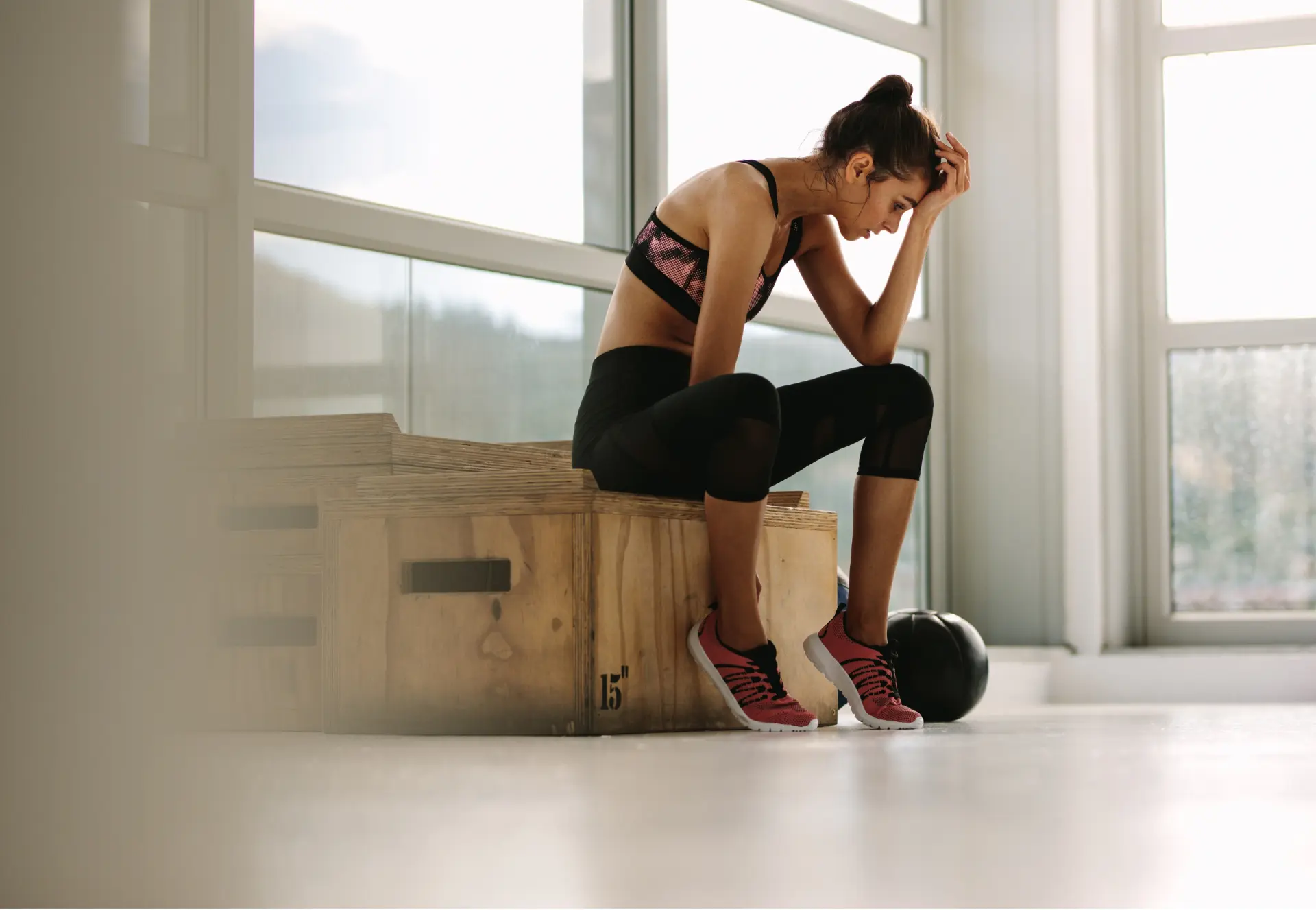
You set your alarm for a 7 a.m. workout. Then you lay awake until 2, woke up at 4, and now you're staring at the ceiling wondering whether you should go at all. Will you get anything out of it? Will you hurt yourself? Is it smarter to rest?
Most advice online lands on one of two extremes: "never skip, push through" or "sleep is everything, stay in bed." The research is more useful than either. One bad night does lower performance, but not evenly. Some kinds of training barely change, some drop a lot, and the time of day you train matters almost as much as how much you slept.
We dug into the best evidence we could find, including a large 2022 meta-analysis of 69 studies on acute sleep loss and exercise, plus reviews on strength training, naps, caffeine, appetite and evening workouts. Below we cover what a "bad night" actually means, what changes in your body, how to adjust today's workout, what to eat, and when skipping really is the better call. One honest caveat up front: almost 9 in 10 participants in this research were men, so we flag where that matters.
What counts as a bad night's sleep?
Not all bad nights are the same, and the research treats them differently. Knowing which one you had helps you decide what to do next.
Researchers usually define acute sleep loss as 6 hours or less in a 24-hour period, compared with a normal night of more than 6 hours. Within that, there are a few patterns:
| What happened | What researchers call it | How much it seems to affect training |
|---|---|---|
| Went to bed late, woke at your usual time or a bit later | Early restriction (delayed sleep onset) | Smallest effect in most studies |
| Went to bed on time, woke up way too early | Late restriction (early waking) | Consistent drop, especially later in the day |
| Barely slept or stayed up all night | Sleep deprivation | Consistent drop across most types of exercise |
| Woke up again and again through the night | Fragmented sleep | Very little research; unclear |
In the 2022 meta-analysis by Craven and colleagues in Sports Medicine, only the "up all night" and "woke too early" patterns had consistently negative effects on performance. Going to bed late, with no early alarm, often didn't move the results much.
Should you work out after a bad night's sleep? What the research says
This block covers how much performance actually drops, and which kinds of training are most affected.
The Craven meta-analysis pooled 227 performance measures from 69 publications. Overall, sleep loss reduced exercise performance by about 7.6% on average, and the effect showed up in every exercise category. But the average hides big differences:
| Type of exercise | Average change after sleep loss |
|---|---|
| Strength (a single max effort, like a 1-rep max or grip test) | About 3% lower |
| Endurance (continuous efforts of 2+ minutes) | About 5.5% lower |
| High-intensity intervals | About 6% lower |
| Short explosive power (jumps, sprints) | About 6% lower |
| Strength-endurance (reps until fatigue) | About 10% lower, but based on very few small studies |
| Skill (precision tasks like serving or shooting) | About 21% lower |
A newer 2025 meta-analysis in Frontiers in Physiology reached a similar conclusion: sleep deprivation impaired several areas of performance, made exercise feel harder, and had larger effects when testing happened in the afternoon or evening.
What does this mean in the gym? Your top-end strength on one or two reps usually holds up reasonably well. Things that depend on coordination, reaction time and focus take the biggest hit. That includes learning a new lift, technical movements, and anything where a lapse in attention matters.
Why lifting usually holds up better than you'd expect
If you lift, this is the reassuring part, with a few limits worth knowing.
A 2018 systematic review in the Journal of Science and Medicine in Sport by Knowles and colleagues looked specifically at resistance training. It found that a single night with no sleep had little effect on muscle strength. The picture changed with several nights in a row of short sleep, which could reduce force on multi-joint lifts like squats and deadlifts, though not on single-joint moves like curls.
The Craven analysis adds two details:
- Lower-body strength was affected; upper-body strength mostly wasn't. Your bench press may feel normal while your squat feels heavy.
- Sets taken close to failure may suffer more than single heavy reps. The strength-endurance category showed the biggest drops among physical tasks, though the evidence there is thin.
The Knowles review also pointed to factors that helped people perform despite poor sleep: training in a group, caffeine, and training before a long stretch of being awake.
Timing matters: train earlier in the day if you can
This is the most practical finding in the research, and it changes what you should do this morning.
In the Craven meta-analysis, sleep loss hurt performance much more in the afternoon and evening than in the morning. For people who woke up too early, the average drop was about 2.5% in morning sessions compared with nearly 10% in afternoon or evening sessions.
The researchers also found that after a sleepless night or an early wake-up, performance declined by roughly 0.4% for every hour you were awake before training. Their example: wake at 3 a.m., train at 3 p.m., and you might expect around a 5% drop.
That runs against the instinct many of us have, which is to "save" the workout for later once we feel more awake. Based on this research, the authors recommend training as soon as practical after waking when you've lost sleep.
Two caveats. Very few of the studies tested people after 6 p.m., so evening training is the least studied. And morning versus evening still depends on your life; a workout you actually do in the evening beats one you skip in the morning.
Why everything feels harder after a bad night
Even when the numbers don't drop much, the workout can feel brutal. That's real, and it's useful information.
Studies consistently find that sleep loss raises perceived effort: the same weight or pace feels harder than it normally would. Researchers also link sleep loss to lower motivation, slower reaction time and poorer attention. So you might be physically capable of your usual session and still feel like you're dragging through mud.
This matters for two reasons. First, it explains why "I felt terrible but my lifts were basically fine" is such a common experience. Second, it's a reason not to judge your progress by a session done on four hours of sleep. One rough workout is not a plateau.
How to adjust your workout after a bad night
Here's how we'd turn the research into changes you can make today. The direction comes from the studies above; the specific numbers are common coaching conventions, not tested prescriptions.
Keep
- Your main lifts. Strength tends to hold up, so there's no need to scrap the session.
- Your warm-up. If anything, take a few extra minutes; it gives you time to judge how you feel.
- Moderate cardio. Easy to moderate effort is a reasonable choice when energy is low.
Change
- Leave more in the tank. Many coaches recommend stopping sets with 2 to 3 good reps left rather than going to failure.
- Trim volume if needed. Dropping one set per exercise, or using a slightly lighter load if your warm-up sets feel heavy, is a sensible starting point.
- Pick stable versions of movements. If you feel unsteady or unfocused, a machine or supported variation is a smarter choice than a complex free-weight lift.
Skip for today
- Max attempts and personal-record tries.
- Learning a new or technical movement. Skill and coordination are the most affected by sleep loss.
- All-out intervals late in the day, which combine the two worst conditions in the research: high intensity and a long time awake.
If you get through your warm-up and still feel dizzy, foggy or uncoordinated, it's fine to switch to a walk or mobility work and call it a day.
Caffeine and naps: what actually helps
Two tools come up again and again in the research. Both help, and both come with timing rules.
Caffeine
The International Society of Sports Nutrition's 2021 position stand says caffeine reliably improves exercise performance at doses of 3 to 6 mg per kg of body weight, usually taken about 60 minutes before training, and that it may help some people's cognitive and physical performance when they're sleep deprived. For a 150 lb (68 kg) person, 3 mg/kg is about 200 mg, roughly two regular cups of brewed coffee. More isn't better: very high doses mostly add side effects.
The catch is your next night. A 2023 meta-analysis of 24 studies in Sleep Medicine Reviews found caffeine cut total sleep by about 45 minutes on average. To avoid that, the authors estimated a regular coffee (about 107 mg) should be finished at least 8.8 hours before bed, and a typical pre-workout serving (about 217 mg) at least 13.2 hours before. If you're aiming for bed at 10:30 p.m., that means your last coffee by about 1:30 p.m. and a pre-workout before about 9:15 a.m.
If you're pregnant, sensitive to caffeine, or have a heart condition, check with your doctor before using it this way.
Naps
A 2023 meta-analysis in the British Journal of Sports Medicine found that a daytime nap improved physical performance and reduced fatigue, both after normal sleep and after a short night. The best results came from naps of 30 to under 60 minutes, usually taken after lunch, with at least an hour between waking up and training so grogginess wears off. The authors were careful to say there isn't yet enough evidence to claim a nap fully makes up for a lost night, and every participant was a young man, so how well this applies to women is still an open question.
What to eat the day after a bad night
Your appetite after poor sleep isn't in your head, and knowing that makes the day easier to handle.
A 2016 meta-analysis led by researchers at King's College London found that people who slept short ate an average of about 385 more calories the next day, without burning noticeably more. They also tended to eat proportionally more fat and less protein.
This isn't a reason to restrict or "make up for" anything. It's a reason to plan ahead so hunger doesn't make your choices for you:
- Build each meal around protein. It's the nutrient sleep-deprived people tend to drift away from, and it supports recovery from training.
- Eat at regular times. Skipping meals on a tired day usually makes evening hunger stronger.
- Have an easy option ready, like yogurt, eggs or leftovers, so you're not making food decisions at your most exhausted.
- Eat before an early session if you normally would. A tired body running on empty is a rough combination.
If you feel hungrier, that's a normal response. Eating a bit more on a tired day is fine; it's the pattern over weeks that matters.
Will working out tonight make it harder to sleep?
Many people skip training after a bad night because they worry about a second bad night. The research is mostly reassuring.
A 2015 meta-analysis in the Journal of Behavioral Medicine found that a single bout of exercise had small benefits for that night's sleep, including falling asleep faster and spending more time in deep sleep. Regular exercise had moderate benefits for overall sleep quality.
What about late workouts? A 2019 meta-analysis in Sports Medicine by Stutz and colleagues reviewed 23 studies on evening exercise and found it generally didn't harm sleep, and if anything slightly helped. The one exception: vigorous exercise ending within about an hour of bedtime was linked to taking longer to fall asleep and sleeping less efficiently.
When skipping your workout is the better call
Rest is a good decision sometimes, not a failure. Skip or swap your session for something gentle if:
- You got almost no sleep or stayed up all night, especially if your workout involves heavy lifting, complex skills or anything where a lapse in focus could hurt you.
- You feel ill, feverish, or like you're coming down with something.
- You'd have to drive while drowsy to get to the gym. That's a real safety risk.
- Short nights are stacking up. Several bad nights in a row is where strength and recovery start to suffer, and where pulling back for a day or two makes sense.
Stop and get medical help right away if you feel chest pain, faintness or an irregular heartbeat during exercise.
And if poor sleep has become your normal, not an occasional bad night, talk to a doctor. Ongoing trouble falling or staying asleep, loud snoring, gasping at night, or feeling exhausted even after a full night are all worth checking out.
Put it together: your week
Here's how to turn all of this into decisions, connecting what you slept, what you train, what you eat and how you feel.
A quick decision guide
| Your night | Today's training | Food and energy |
|---|---|---|
| Went to bed late, still got close to 6 hours | Train as planned. Earlier session if you can. | Normal day. Coffee before early afternoon. |
| Woke up too early, under 6 hours | Train, ideally in the morning. Keep main lifts, leave 2 to 3 reps in reserve, skip PRs. | Protein at every meal. Consider a 30 to 60 minute nap if your day allows. |
| Broken sleep, feel foggy | Main lifts at easier effort, or swap for moderate cardio. Skip technical work. | Plan easy meals ahead. Expect more hunger. |
| Barely slept or stayed up all night | Rest, walk or do mobility work. | Regular meals, early caffeine only, early bedtime. |
| Third short night in a row | Pull back: lighter session or a rest day. | Make tonight's sleep the priority. Talk to a doctor if this is your new normal. |
What a week with one bad night might look like
Say you train three days a week: Monday, Wednesday and Friday. You sleep badly Tuesday night.
- Wednesday: Move your session to the morning if you can. Do your squats and presses with one less set and stop a couple of reps short of failure. Skip the new movement you planned to practice. Coffee with breakfast, protein-forward lunch, and an easy dinner you already have at home.
- Wednesday night: No coffee after early afternoon, and no hard intervals right before bed. A short walk after dinner is fine.
- Friday: If Wednesday and Thursday nights were normal, train as planned. One bad night doesn't need to change your whole week.
The point isn't to follow this exactly. It's to notice that your sleep, energy and appetite are all part of the same day, and your training plan should respond to them instead of pretending last night didn't happen.
Frequently asked questions
Should I work out after a bad night's sleep or rest?
For most people after one short night, a lighter workout is better than skipping. Research shows performance drops by a few percent on average, and strength holds up fairly well. Rest instead if you got almost no sleep, feel ill, or have had several bad nights in a row.
Is it bad to lift weights on little sleep?
Not usually. A systematic review found one night without sleep had little effect on muscle strength, though several short nights in a row could reduce strength on big lifts like squats. Skip max attempts and technical new lifts, and stop sets a couple of reps short of failure.
Is it better to work out in the morning or evening after poor sleep?
Morning, in most cases. A large meta-analysis found sleep loss hurt performance much more in afternoon and evening sessions, and performance slipped by about 0.4% for each hour awake before training. If evening is the only time you can train, it's still worth doing.
Does a nap before a workout help if I didn't sleep well?
It can. A 2023 meta-analysis found naps of 30 to under 60 minutes improved physical performance and reduced fatigue, including after short nights. Leave at least an hour between waking from the nap and training so the grogginess wears off. These studies only included young men, so results in women are less certain.
Why am I so hungry after a bad night's sleep?
Short sleep reliably increases appetite. A meta-analysis found people ate about 385 more calories the day after restricted sleep, with more fat and less protein. Plan protein-forward meals and keep easy options on hand rather than trying to ignore the hunger.
How many hours of sleep do I need to work out?
There's no hard cutoff, but most research defines sleep loss as 6 hours or less. Above that, you can usually train as planned. Below that, adjust intensity and timing, and if you got little or no sleep, a rest or recovery day is the safer choice.
Conclusion
So, should you work out after a bad night's sleep? Usually yes, with some changes. One short night lowers performance by a few percent on average, and strength tends to hold up better than skill, focus or high-rep grinding. The biggest levers you control are timing and effort: train earlier if you can, keep your main lifts, leave reps in the tank and save the PRs for a rested day.
Then look after the rest of the day. Expect more hunger and plan for it, use caffeine early, nap if you can, and protect tonight's sleep. Rest is the right call when you barely slept, feel unwell or the bad nights are piling up. One rough night doesn't erase your progress; it just asks for a smarter session.
This article is for general education and isn't medical advice.
If you want help putting this into your own week, Wellio is an AI coach that sees the whole picture: it builds your plan around your workouts, meals, sleep and energy, and guides you day by day as life changes. After a rough night, log how you slept and how you feel, ask the coach what to do with today's workout, and approve any change it suggests. Join the Wellio waitlist.
Sources
- Craven J, et al. Effects of Acute Sleep Loss on Physical Performance: A Systematic and Meta-Analytical Review. Sports Medicine, 2022.pmc.ncbi.nlm.nih.gov
- Knowles OE, et al. Inadequate sleep and muscle strength: Implications for resistance training. Journal of Science and Medicine in Sport, 2018.pubmed.ncbi.nlm.nih.gov
- Kong Y, et al. Effects of sleep deprivation on sports performance and perceived exertion in athletes and non-athletes: a systematic review and meta-analysis. Frontiers in Physiology, 2025.frontiersin.org
- Guest NS, et al. International Society of Sports Nutrition position stand: caffeine and exercise performance. Journal of the International Society of Sports Nutrition, 2021.pmc.ncbi.nlm.nih.gov
- Gardiner C, et al. The effect of caffeine on subsequent sleep: A systematic review and meta-analysis. Sleep Medicine Reviews, 2023.nutrition-evidence.com
- Mesas AE, et al. Is daytime napping an effective strategy to improve sport-related cognitive and physical performance and reduce fatigue? British Journal of Sports Medicine, 2023.bjsm.bmj.com
- Al Khatib HK, et al. The effects of partial sleep deprivation on energy balance: a systematic review and meta-analysis. European Journal of Clinical Nutrition, 2016 (King's College London summary).kcl.ac.uk
- Kredlow MA, et al. The effects of physical activity on sleep: a meta-analytic review. Journal of Behavioral Medicine, 2015.pubmed.ncbi.nlm.nih.gov
- Stutz J, et al. Effects of Evening Exercise on Sleep in Healthy Participants: A Systematic Review and Meta-Analysis. Sports Medicine, 2019.pubmed.ncbi.nlm.nih.gov
Make it work
for your week.