Upper Body Workout
for Women at the GymA Simple Plan That Works
An upper body workout for women at the gym: the 5 movements to train, the best machine, cable and dumbbell options, two ready workouts and how to progress.
 By Wellio
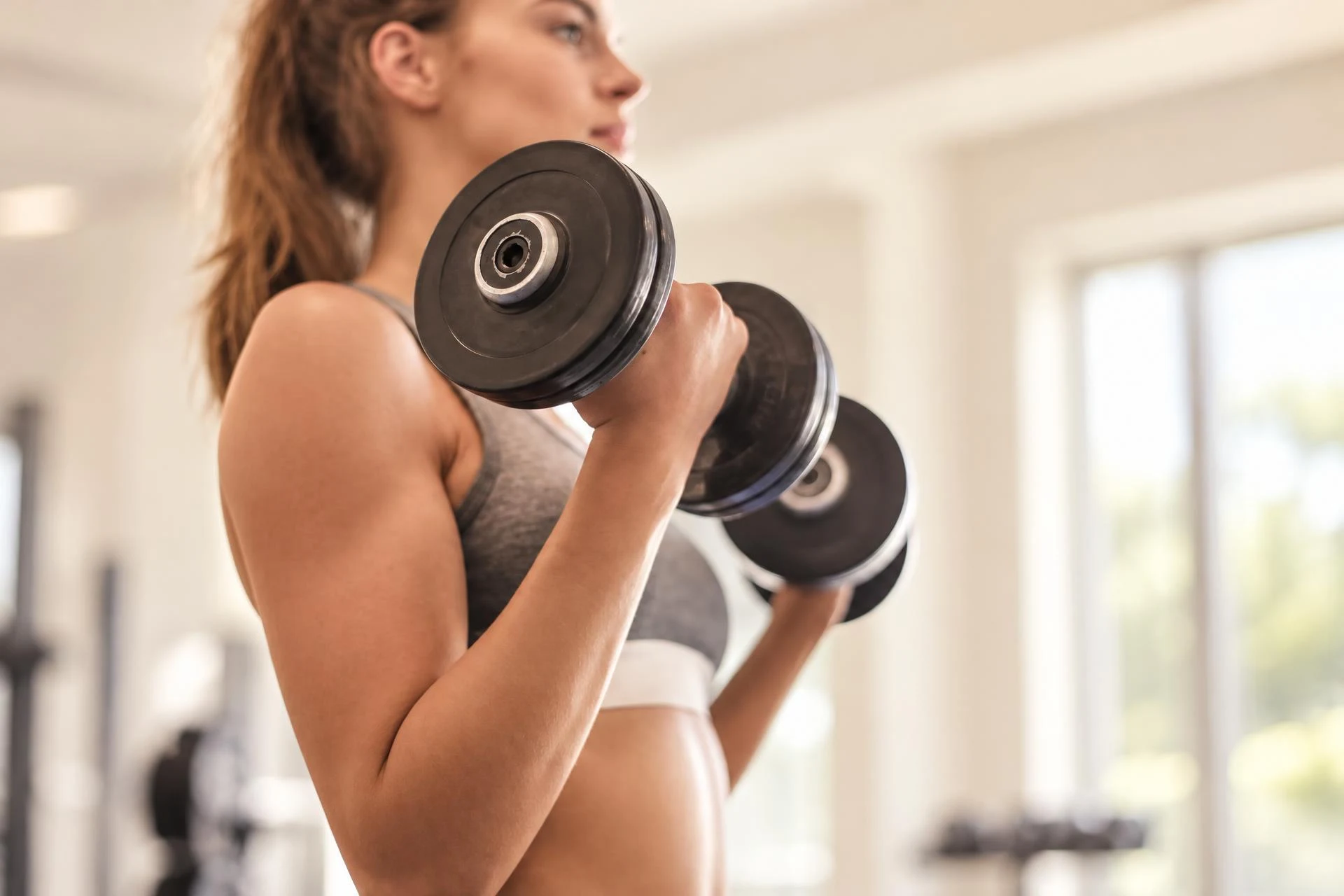
You've got your leg day sorted. Squats, hip thrusts, maybe a few lunges. But when it comes to your upper body, you're less sure. You do a few bicep curls, maybe a set on the chest press if it's free, and then you're not really sure what else to do. Or you skip it because you're worried about "bulky arms."
That's one of the most common gaps we see. Many women train their lower body hard and their upper body barely at all, which is a shame, because the upper body is often where beginners make the fastest, most noticeable progress.
This guide fixes that. We cover why upper body training matters, the five movement patterns that make up a complete upper body routine, the best machine, cable and dumbbell options for each, two ready-to-use workouts, how to progress, how to fit upper body days into your week, and how to keep your shoulders happy. We also take an honest look at the "bulky arms" worry.
Why upper body training matters for women
On average, women start with less upper-body muscle and strength than men. A 2016 study in PeerJ put 44 men and 47 women through the same 10-week resistance training program. Before training, the men's arm-flexing strength was roughly double the women's. But both groups improved by about the same percentage, around 11 to 12%.
A 2025 systematic review and meta-analysis in PeerJ by Refalo, Nuckols and colleagues looked at 29 studies on muscle growth from resistance training. Men gained slightly more muscle in absolute terms, especially in the upper body, but relative gains were similar between the sexes. The authors concluded that women have a similar potential to build muscle as men.
Put simply: you may start from a lower baseline, but your upper body responds to training just as well. A 2026 National Geographic article on women and strength training also noted research suggesting untrained women have a high capacity to increase upper-body strength, which matches what many women notice in their first few months.
There are practical reasons too: carrying groceries, lifting a suitcase overhead or picking up a child all get easier, and a stronger back makes lifts like deadlifts and goblet squats easier to hold.
The 5 upper body movement patterns
| Movement pattern | What it trains | Example |
|---|---|---|
| Horizontal push | Chest, front of shoulders, triceps | Chest press, push-up, dumbbell bench press |
| Vertical push | Shoulders, triceps | Shoulder press, dumbbell overhead press |
| Horizontal pull | Upper and middle back, rear shoulders, biceps | Seated cable row, dumbbell row |
| Vertical pull | Lats (the wide back muscles), biceps | Lat pulldown, assisted pull-up |
| Arms and rear shoulders | Biceps, triceps, rear delts | Curls, triceps pushdowns, face pulls, reverse flyes |
A useful rule of thumb many coaches use: do at least as much pulling as pushing. Most daily life involves reaching forward (typing, driving, carrying), so rows and pulldowns help balance things out. This is coaching convention rather than a tested rule, but it's a sensible default.
Best upper body exercises at the gym: machine, cable and dumbbell options
The 2026 American College of Sports Medicine (ACSM) position stand found that machines and free weights produced similar strength and muscle results for most healthy adults. So choose based on comfort, confidence and what's available.
| Pattern | Machine | Cable | Dumbbell |
|---|---|---|---|
| Horizontal push | Chest press machine | Cable chest press (standing) | Dumbbell bench press or incline press |
| Vertical push | Shoulder press machine | Half-kneeling single-arm cable press | Seated dumbbell shoulder press |
| Horizontal pull | Seated row machine | Seated cable row | Single-arm dumbbell row (supported on a bench) |
| Vertical pull | Lat pulldown, assisted pull-up machine | Single-arm lat pulldown | Not ideal with dumbbells; use a machine or cable |
| Biceps | Biceps curl machine | Cable curl | Dumbbell curl, hammer curl |
| Triceps | Triceps extension machine | Triceps rope pushdown | Overhead dumbbell extension |
| Rear shoulders | Reverse fly machine (rear delt setting) | Face pull, cable reverse fly | Bent-over dumbbell reverse fly |
How to choose
- New to the gym? Start with machines for the main lifts. The path is set for you, which makes it easier to focus on effort.
- Comfortable with the basics? Add dumbbells for presses and rows. They let each arm work on its own and fit more body shapes.
- Gym busy? Cables are flexible: one cable station can cover rows, presses, pushdowns, curls and face pulls.
Upper body workout for women at the gym: Workout A and Workout B
Here are two upper body workouts you can alternate. The sets, reps and rest times are common coaching choices that fit the ACSM recommendations, not prescriptions from a specific study.
Workout A (machine-focused)
| Exercise | Sets | Reps | Rest |
|---|---|---|---|
| Chest press machine | 3 | 8 to 12 | 90 seconds |
| Lat pulldown | 3 | 8 to 12 | 90 seconds |
| Shoulder press machine | 2 | 10 to 12 | 90 seconds |
| Seated cable row | 3 | 10 to 12 | 90 seconds |
| Cable face pull | 2 | 12 to 15 | 60 seconds |
| Triceps rope pushdown | 2 | 12 to 15 | 60 seconds |
Workout B (dumbbell and cable-focused)
| Exercise | Sets | Reps | Rest |
|---|---|---|---|
| Incline dumbbell press | 3 | 8 to 12 | 90 seconds |
| Single-arm dumbbell row | 3 | 8 to 12 per arm | 60 seconds per side |
| Assisted pull-up or single-arm lat pulldown | 3 | 8 to 10 | 90 seconds |
| Seated dumbbell shoulder press | 2 | 10 to 12 | 90 seconds |
| Dumbbell or cable curl | 2 | 10 to 15 | 60 seconds |
| Bent-over dumbbell reverse fly | 2 | 12 to 15 | 60 seconds |
How to run it
- Warm up for 5 to 10 minutes: a few minutes of easy cardio (rowing machine is ideal), then one light set of your first exercise.
- Each session takes about 40 to 50 minutes.
- Want a shorter session? Pair a push with a pull (for example, chest press then lat pulldown) and rest after each pair. Our 30 minute gym workout explains this "superset" approach.
- Working toward a pull-up? Workout B's assisted pull-ups are a good start. Our guide to doing your first pull-up has a full 10-week progression.
How to choose weights and keep progressing
Choosing your starting weight
Pick a weight you can lift for the top of the rep range with good form. Then use the "reps left" test: at the end of each set, ask how many more reps you could have done.
| After the set, you could have done... | Next set |
|---|---|
| 5 or more extra reps | Go heavier |
| 2 to 3 extra reps | Keep this weight |
| 0 to 1, or your form broke down | Go a little lighter |
Upper body muscles are smaller, so your weights may feel light compared with your leg exercises. That's normal. But "light" shouldn't mean "easy": the last couple of reps of each set should feel genuinely hard. A 2017 meta-analysis by Schoenfeld and colleagues found that lighter and heavier loads built similar amounts of muscle when sets were taken close to failure, while heavier loads built more maximal strength.
If you're not sure your weights are challenging enough, our guide on how to know if you're lifting heavy enough walks through the signs.
Progressing
Use the same exercises for at least 4 to 6 weeks. When you reach the top of the rep range on all sets, increase the weight by the smallest step available (often 2.5 to 5 lb on dumbbells, or one plate on a machine), then build back up. Upper body lifts usually progress more slowly than lower body lifts, so smaller jumps or adding a rep first are perfectly fine.
Will lifting weights make my arms bulky?
This worry keeps a lot of women away from upper body training, so it's worth addressing honestly.
Building noticeable muscle size takes a long time, consistent hard training and enough food to support it. Men have much higher testosterone levels, which is a big part of why they usually carry more upper-body muscle. As the 2025 PeerJ meta-analysis found, women's relative muscle growth is similar to men's, but absolute upper-body gains tended to favor men.
What most women notice in the first few months is that their arms and shoulders look and feel firmer, their posture changes, and everyday tasks get easier. How "toned" muscle looks depends mostly on the amount of muscle and on body fat, which is shaped by training, food, genetics and time.
If you ever feel you've built more muscle than you want in a particular area, that's easy to adjust: you can simply reduce the volume for that body part. Muscle changes slowly in both directions.
How to fit upper body days into your week
The ACSM 2026 guidelines recommend training each major muscle group at least twice a week, with about 10 hard sets per muscle group per week as a useful target for muscle growth. Two upper body workouts a week (A and B above) get most women close to that.
| Training days | Option | How it works |
|---|---|---|
| 2 to 3 days | Full body | Include 1 push and 1 pull in every session, plus a lower body exercise or two |
| 4 days | Upper/lower split | Upper A, Lower, Upper B, Lower |
For a 4-day week, a common layout looks like this:
| Day | Session |
|---|---|
| Monday | Upper body (Workout A) |
| Tuesday | Lower body |
| Wednesday | Rest, walk or a class |
| Thursday | Upper body (Workout B) |
| Friday | Lower body |
| Weekend | Rest or something active |
If you're unsure how many days to train or how to place them around work and life, our step-by-step guide on how to plan your workout week walks through it.
Shoulder-friendly tips and when to see a physio
The shoulder is a mobile joint, and a little care goes a long way. These are general coaching tips, not medical advice.
- Warm up first. A few minutes of light rowing or arm circles, then a light set of your first exercise.
- Keep your shoulder blades steady. On rows and pulldowns, think about pulling your elbows toward your back pockets, not shrugging toward your ears.
- Find a comfortable range. On presses, stop where your shoulders feel good rather than forcing a deeper range.
- Try a neutral grip. Palms facing each other (on dumbbells or a neutral-grip handle) is often more comfortable for the shoulders than a wide, palms-forward grip.
- Choose an incline over flat or overhead if a flat press or overhead press doesn't feel good.
- Balance push and pull. Include rows, face pulls and reverse flyes each week.
Normal training effort feels like muscle fatigue or burning. Stop an exercise if you feel sharp or pinching pain in the joint. Talk to a doctor or physio if shoulder pain persists, keeps getting worse, wakes you at night, comes with numbness, tingling or weakness, or followed a fall or injury. Get urgent care for sudden severe pain, a visible deformity, or chest pain with arm pain.
Put it together: your week
Upper body progress depends on more than your workouts. Here's how training, food, sleep and energy fit together.
A sample 3-day full-body week with upper body focus
| Day | Session |
|---|---|
| Monday | Full body: chest press, lat pulldown, goblet squat, Romanian deadlift, face pull |
| Wednesday | Full body: dumbbell row, shoulder press, split squat, hip thrust, triceps pushdown |
| Friday | Upper body (Workout A or B) plus one lower body exercise |
Food
Muscle needs building material. The 2025 to 2030 Dietary Guidelines for Americans recommend 1.2 to 1.6 g of protein per kg of body weight a day, spread across meals. Including a good protein source at every meal is a simple way to get there without counting.
Sleep and energy
On a bad night's sleep, keep your main lifts but go a little lighter and skip personal records. On a great day, push for an extra rep.
Tracking
Write down your weights and reps for each exercise. Upper body progress is often slow and steady (one extra rep this week, 2.5 lb more next month), and you'll only see it if you record it.
Frequently asked questions
What is a good upper body workout for women at the gym?
A good upper body workout covers a horizontal push, a vertical push, a horizontal pull, a vertical pull, plus some arm and rear shoulder work. For example: chest press, shoulder press, seated row, lat pulldown, face pulls and triceps pushdowns, 2 to 3 sets of 8 to 15 reps each.
How often should women train upper body?
At least twice a week. The 2026 ACSM guidelines recommend training each major muscle group at least twice a week, with about 10 hard sets per muscle group weekly as a useful target for muscle growth.
Will lifting weights make my arms bulky?
It's very unlikely. Building noticeable muscle size takes a long time, consistent hard training and enough food, and men's higher testosterone is a big reason they usually carry more upper-body muscle. Most women see firmer, stronger arms and better posture.
Should I use machines or free weights for upper body?
Either works. The 2026 ACSM guidelines found that machines and free weights produced similar results for most healthy adults. Machines are easier to learn, while dumbbells let each arm work on its own. Many women use both.
Why is upper body progress slower than lower body?
Upper body muscles are smaller, so the jumps in weight feel bigger relative to what you're lifting. Use the smallest weight increase available, or add a rep or two before increasing the weight, and track your sets so you can see slow progress.
Conclusion
An upper body workout for women at the gym doesn't need to be complicated. Cover five patterns (push forward, push up, pull back, pull down, plus arms and rear shoulders), choose the machine, cable or dumbbell option that suits you, and train your upper body at least twice a week.
Pick weights that feel genuinely hard by the last few reps, log your sets, and add a rep or a small amount of weight over time. Your upper body responds to training just as well as anyone's, and many women find it's where they see the quickest progress.
This article is for general education and isn't medical advice.
If you want help putting this into your own week, Wellio is an AI coach that sees the whole picture: it builds your plan around your workouts, meals, sleep and energy, and guides you day by day as life changes. Tell it your goal, schedule and equipment to get a starting plan with upper body days built in, log your sets as you go, and get suggestions for when to move up in weight. Join the Wellio waitlist.
Sources
- Comparison of upper body strength gains between men and women after 10 weeks of resistance training. PeerJ, 2016peerj.com
- Refalo MC, Nuckols G, Galpin AJ, Gallagher IJ, Hamilton DL, Fyfe JJ. Sex differences in absolute and relative changes in muscle size following resistance training in healthy adults: a systematic review with Bayesian meta-analysis. PeerJ, 2025doaj.org
- Singleton H. Women and strength training: hormones and muscle growth. National Geographic, 2026nationalgeographic.com
- American College of Sports Medicine. 2026 resistance training position stand (press release via Newswise)newswise.com
- Schoenfeld BJ, Grgic J, Ogborn D, Krieger JW. Strength and hypertrophy adaptations between low- vs. high-load resistance training: a systematic review and meta-analysis. Journal of Strength and Conditioning Research, 2017 (Canadian Kinesiology Alliance summary)cka.ca
- American Academy of Family Physicians. Dietary Guidelines for 2025 to 2030. American Family Physician, 2026aafp.org
Make it work
for your week.