Gym
AnxietyWhy It Happens and How to Get Past It
Gym anxiety is common, especially in the weights section. What research says about why it happens and a simple step-by-step plan to feel at home in the gym.
 By Wellio
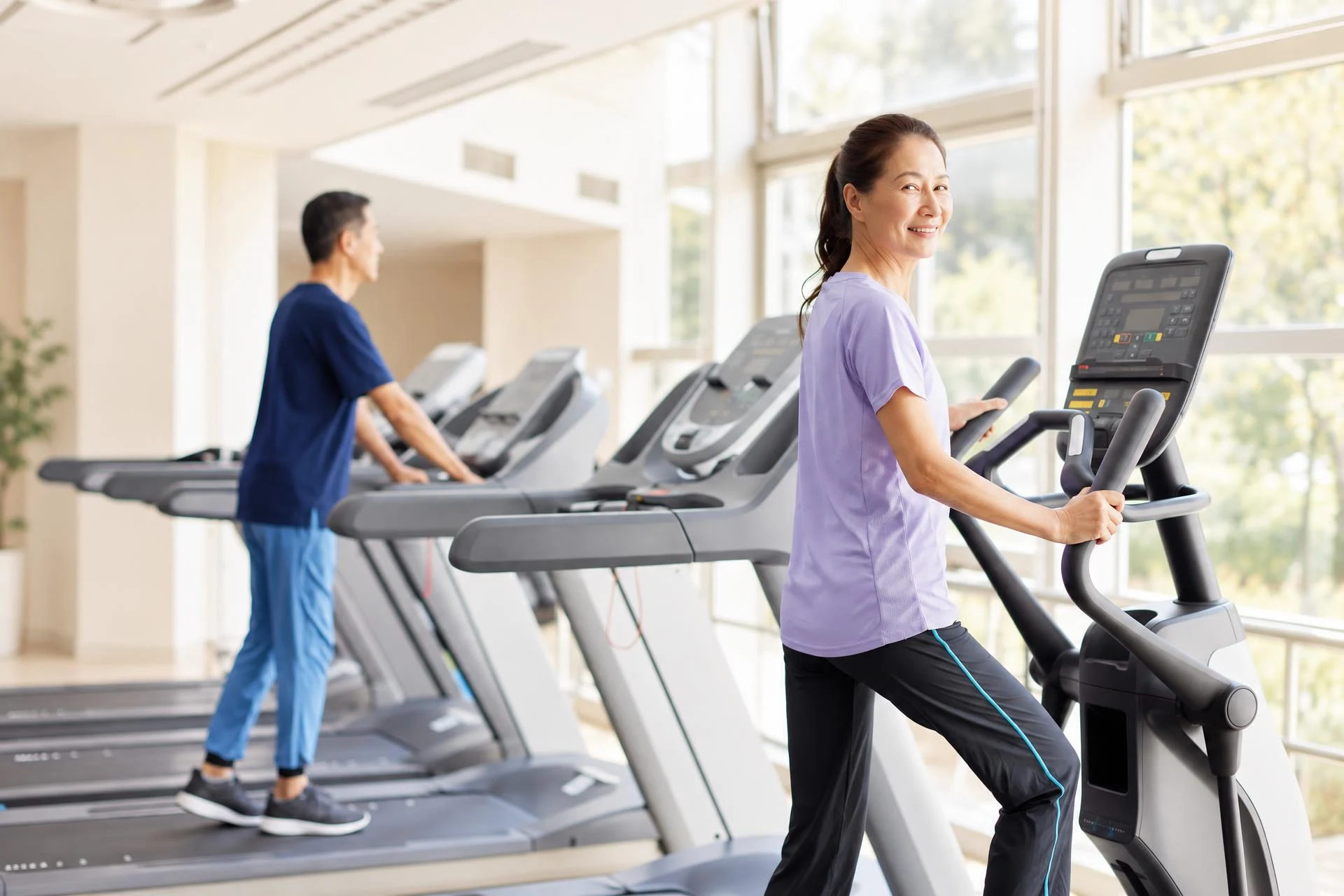
You've got a gym membership. Maybe you've even walked past the weights section a few times. But every time you think about actually going in, picking up a barbell and doing something you're not sure about, your chest tightens. What if everyone's watching? What if you use something wrong? What if you're in someone's way?
So you end up on the treadmill again, or you skip the gym altogether. Then you feel annoyed with yourself, because you know lifting is what you actually want to do.
If that sounds familiar, you're not unusual, and there's nothing wrong with you. Researchers have studied this exact feeling, especially in women, and the findings are oddly reassuring: the problem is less about you and more about how gyms feel and how anxiety works.
We looked at research on social physique anxiety, studies of women's experiences in gyms and weight rooms, a meta-analysis on strength training and anxiety, and NHS guidance on facing fears. Below we cover why gym anxiety happens, why the weights section feels worst, a four-step plan to get past it, exactly what to say in the gym, and when anxiety might need more support.
What is gym anxiety?
"Gym anxiety" or "gymtimidation" isn't a medical diagnosis. It's a common term for nervousness, self-consciousness or dread about exercising in a gym, especially around other people.
Researchers have a related, well-studied idea called social physique anxiety: worry about how others are judging your body. It was first measured in 1989 by Hart, Leary and Rejeski, whose scale asks how anxious people feel about others evaluating their weight, shape or muscle tone in social settings. Gyms, with their mirrors, open floors and tight clothing, are almost designed to trigger it.
Gym anxiety usually shows up in a few ways:
| What it feels like | What it often leads to |
|---|---|
| "Everyone's watching me" | Avoiding busy times or busy areas |
| "I'll do it wrong and look stupid" | Sticking to familiar machines or cardio |
| "I'm in someone's way" | Rushing sets, skipping rest, leaving early |
| "I don't belong here" | Not going at all |
Why the weights section feels the scariest
If cardio machines feel fine but the free weights area feels off-limits, that's a pattern researchers have documented.
Women worry more about being judged when lifting
A 2010 study in Sex Roles by Salvatore and Marecek ran a series of studies with women at a US university. When women imagined lifting weights in public, they reported more concern about being judged than when they imagined doing aerobic exercise. Those evaluation concerns appeared to discourage women from lifting and helped explain why women and men used gym equipment differently.
Women often shrink their space
A 2018 study in Social Science & Medicine led by Stephanie Coen interviewed 52 gym-goers who also kept journals about their gym experiences. Both men and women felt that men take up more physical and "sonic" space in the gym. Many women minimized their time and space so they wouldn't get in someone else's way. One young woman described feeling she couldn't assert herself on equipment without being judged, while a man could.
Feeling "on show"
A UK study from the University of Lincoln, based on 18 interviews and fieldwork in four commercial gyms, described weights areas as strongly gender-segregated. Women described emotional barriers to entering what felt like male territory, and a sense of being constantly on show.
A 2025 mixed-methods study in PLOS One surveyed 279 women about body image and gym experiences. Many felt judged for how they looked or exercised, and some described unwanted attention from men. But some women also described the gym as empowering, especially when they had supportive environments or broke stereotypes.
What this means: if the weights section makes you anxious, you're reacting to something real about how many gyms feel. That's not a reason to stay out. It's a reason to go in with a plan instead of willpower.
Why avoiding the gym makes anxiety worse
Anxiety has a frustrating loop. When you avoid something that scares you, you feel relief right away. That relief teaches your brain that avoiding was the right call, so the next time feels even scarier.
The NHS describes this directly in its guidance on facing fears: avoidance brings short-term relief but can make situations harder to face and allow fears to grow. Their recommended approach is gradual exposure:
- Make a list of situations you fear and rate each from 0 (not hard) to 100 (most fear).
- Start with the easiest one.
- Stay in the situation until your fear rating drops by about half.
- Repeat it until it feels manageable, then move up the list.
- Go at your own pace. Some steps take longer than others.
The NHS also notes that the more times you face a fear, the less scary it becomes. That's exactly what happens with the gym: the tenth time you walk into the weights section feels nothing like the first.
One nuance from the NHS guidance: try to face the fear without leaning on reassurance or distractions to escape it. A written plan on your phone is useful. Scrolling your phone between every set so you don't have to feel uncomfortable is a way of avoiding, and it can keep the anxiety going.
A 4-step plan to beat gym anxiety
Here's how to turn gradual exposure into a gym plan. The steps and examples are our practical suggestions, built on the NHS approach above, not a clinical program.
Step 1: Build your gym anxiety ladder
Write down 6 to 8 gym situations and rate each from 0 to 100. Yours will be personal, but here's an example:
| Situation | Fear rating (example) |
|---|---|
| Walking around the gym with no plan | 20 |
| Using a machine in a quiet corner | 30 |
| Using dumbbells near the mirror | 50 |
| Doing a goblet squat in the open weights area | 60 |
| Asking someone how many sets they have left | 70 |
| Using a squat rack or barbell | 85 |
| Doing all of the above at a busy time | 95 |
Step 2: Choose your timing and your spot
Start at the bottom of your ladder, at a time that makes it easier.
- Pick quiet times first, often mid-morning, early afternoon or later evening, depending on your gym. Ask the front desk when it's least busy.
- Choose a base. A bench or corner near the dumbbells gives you one spot to return to, so you're not wandering.
- Do the same session in the same place a few times before changing anything. Familiarity is what lowers the rating.
Step 3: Go with a written plan
Most gym anxiety spikes in the moments when you don't know what to do next. Remove those moments.
- Write the exact session on your phone: exercises, order, sets, reps and starting weights.
- Add a backup for each exercise in case equipment is taken.
- Watch a short video of each new exercise before you go, so the movement isn't new when you're standing there.
If you're not sure what to put in your plan, our guide to what to do at the gym as a beginner has a full first week, session by session.
Step 4: Move up the ladder, one rung at a time
- Stay with each rung until your rating drops by about half, and repeat it over a few sessions.
- Then add one new thing, such as moving from a machine to dumbbells in the open area.
- Expect a small spike each time you step up. That's normal, and it fades with repetition.
- Track your ratings. Writing "50 today, 30 last week" makes progress visible on days it doesn't feel like it.
What to say and ask at the gym
Not knowing gym etiquette is a big source of anxiety. These are normal phrases you'll hear in any gym.
| Situation | What to say |
|---|---|
| Someone's using equipment you need | "How many sets do you have left?" |
| You'd like to share a machine | "Mind if I work in between your sets?" |
| You don't know how a machine works | Ask staff: "Could you show me how to set this up?" |
| Someone asks to share with you | "Sure, I've got two more sets." |
| Someone gives unsolicited advice | "Thanks, I'll keep that in mind." |
| You're not sure if equipment is free | "Are you using this?" |
A few more things that help:
- Gym staff expect questions. Many gyms offer a free orientation or a session with a trainer. Booking one turns "I'll look stupid" into "someone already showed me."
- You're allowed to take your time. Rest between sets is part of training, not you "hogging" equipment.
- Re-racking weights and wiping equipment covers most etiquette worries.
- If you experience harassment, report it to gym staff. You don't have to handle it alone.
Training can reduce anxiety, too
Here's an encouraging bonus: once you get going, strength training itself may help with anxiety more generally.
A 2017 meta-analysis in Sports Medicine by Gordon and colleagues pooled 16 randomized trials with 922 participants, about two-thirds of them women. Resistance training significantly reduced anxiety symptoms compared with no exercise, and effects were larger in healthy participants than in people with a physical or mental illness. The benefits didn't depend on age, sex or training intensity.
That doesn't mean lifting replaces treatment for an anxiety disorder. But it does mean the gym anxiety you feel now isn't the whole story: the habit you're building can make you feel calmer over time.
When it's more than gym nerves
Sometimes gym anxiety is part of something broader. According to Mayo Clinic, it's worth talking to a doctor or mental health professional if:
- Worry feels excessive and gets in the way of work, relationships or daily life
- Fear or anxiety is distressing and hard to control
- You also feel depressed, or are using alcohol or drugs to cope
- You suspect a physical health problem may be involved
- You have thoughts of suicide. In the US, call or text 988 to reach the 988 Suicide & Crisis Lifeline, 24/7
Signs that anxiety is broader than the gym include a strong urge to avoid many situations, not just this one, frequent racing heart or shallow breathing, and trouble controlling worry. Anxiety is often easier to treat when addressed early, and therapies like cognitive behavioral therapy are built around the same idea of facing fears gradually, with expert support.
If body image worries or thoughts about weight feel overwhelming, that's also a good reason to talk to a professional.
Put it together: your week
Here's a sample first week that combines a gentle exposure plan with training, food, sleep and energy.
| Day | Plan |
|---|---|
| Monday | Quiet-time visit. Machine session in one spot (fear rating 30). Note your rating before and after. |
| Tuesday | Rest or a walk. Watch videos for Wednesday's exercises. |
| Wednesday | Same session, same spot. Add one dumbbell exercise near your base (rating 50). |
| Thursday | Rest. Eat regular meals; a nervous stomach before a workout is common, so a light snack an hour or two before can help. |
| Friday | Same session. Ask one person, "How many sets do you have left?" (rating 70). |
| Weekend | Rest or something active you enjoy. Look back at your ratings. |
A few connections that make the plan easier:
- Sleep matters for anxiety. On a short night, things often feel more stressful. If you've slept badly, do a lower rung on your ladder rather than skipping the gym entirely.
- Low energy amplifies nerves. Eating before you go and showing up with a plan reduces the number of decisions you make when you're already tense.
- Progress shows up on paper. Logging your sessions and your fear ratings side by side lets you see both getting better.
If gym anxiety is mixed with confusion about what to train, start with our broader guide on how to start lifting weights at the gym, then use this plan to get comfortable doing it.
Frequently asked questions
Is gym anxiety normal?
Yes. Research on women in gyms finds many feel judged or out of place, especially in weight areas. One study found women imagining lifting weights in public reported more concern about being judged than when imagining aerobic exercise.
How do I get over gym anxiety?
Use gradual exposure. List gym situations from least to most scary, start with the easiest at a quiet time, repeat it until your anxiety drops by about half, then move up one step. Going with a written plan removes the moments where anxiety spikes.
Why am I scared of the weights section?
Weights areas are often male-dominated and open, which can make you feel watched. Studies describe women minimizing their time and space there to avoid being in someone's way. The fear usually fades once the area becomes familiar.
Is it weird to go to the gym alone?
Not at all. Plenty of people train alone. Going alone with a written plan and headphones is completely normal, and many people find it easier than training with someone else.
What should I do if someone is watching me at the gym?
Most people are focused on their own workout. If someone makes you uncomfortable, harasses you or gives unwanted attention, tell gym staff. You don't need to tolerate it.
Can exercise help anxiety?
It can. A meta-analysis of 16 trials found resistance training significantly reduced anxiety symptoms. It isn't a replacement for treatment, so talk to a doctor if anxiety is affecting daily life.
Conclusion
Gym anxiety is common, and research suggests it's mostly about feeling watched and judged, especially for women in weight areas. Avoiding the gym brings quick relief but makes the fear bigger. Small, repeated steps make it smaller.
So build your ladder, start at the bottom at a quiet time, and go with a written plan. Repeat each step until it feels ordinary, then take the next one. Learn a few standard gym phrases, and lean on staff. Within a few weeks, the weights section can go from the scariest part of the gym to just another place you train. And if anxiety is spreading beyond the gym, reach out for support.
This article is for general education and isn't medical advice.
If you want help putting this into your own week, Wellio is an AI coach that sees the whole picture: it builds your plan around your workouts, meals, sleep and energy, and guides you day by day as life changes. Answer a few questions to get a starting plan, keep each session written out on your phone with reminders, and log your sets so you can see yourself getting more confident and stronger. Join the Wellio waitlist.
Sources
- Hart EA, Leary MR, Rejeski WJ. The measurement of social physique anxiety. Journal of Sport and Exercise Psychology, 1989scholars.duke.edu
- Social Physique Anxiety Scale (Leary lab, Duke University)sites.duke.edu
- Salvatore J, Marecek J. Gender in the gym: Evaluation concerns as barriers to women's weight lifting. Sex Roles, 2010works.swarthmore.edu
- Coen SE, et al. "It's gym, like g-y-m not J-i-m": Exploring the role of place in the gendering of physical activity. Social Science & Medicine, 2018 (Western University news)news.westernu.ca
- Turnock L. "There's a difference between tolerance and acceptance": Exploring women's experiences of barriers to access in UK gyms (University of Lincoln summary)uolcollegeofsocialscienceresearch.blogs.lincoln.ac.uk
- Cowley E, Schneider K, et al. Women's body image and gym experiences. PLOS One, 2025 (Theravive summary)theravive.com
- Gordon BR, et al. The Effects of Resistance Exercise Training on Anxiety: A Meta-Analysis and Meta-Regression Analysis of Randomized Controlled Trials. Sports Medicine, 2017pure.ul.ie
- NHS Every Mind Matters. Facing your fearsnhs.uk
- Mayo Clinic. Anxiety disorders: symptoms and when to see a doctormayoclinic.org
Make it work
for your week.