Weighted Vest
WalkingDoes It Work? What the Research Says
Thinking about adding a vest to your daily walk? Here is what it really does for calories, bones and strength, how heavy to start, and who should be careful.
 By Wellio
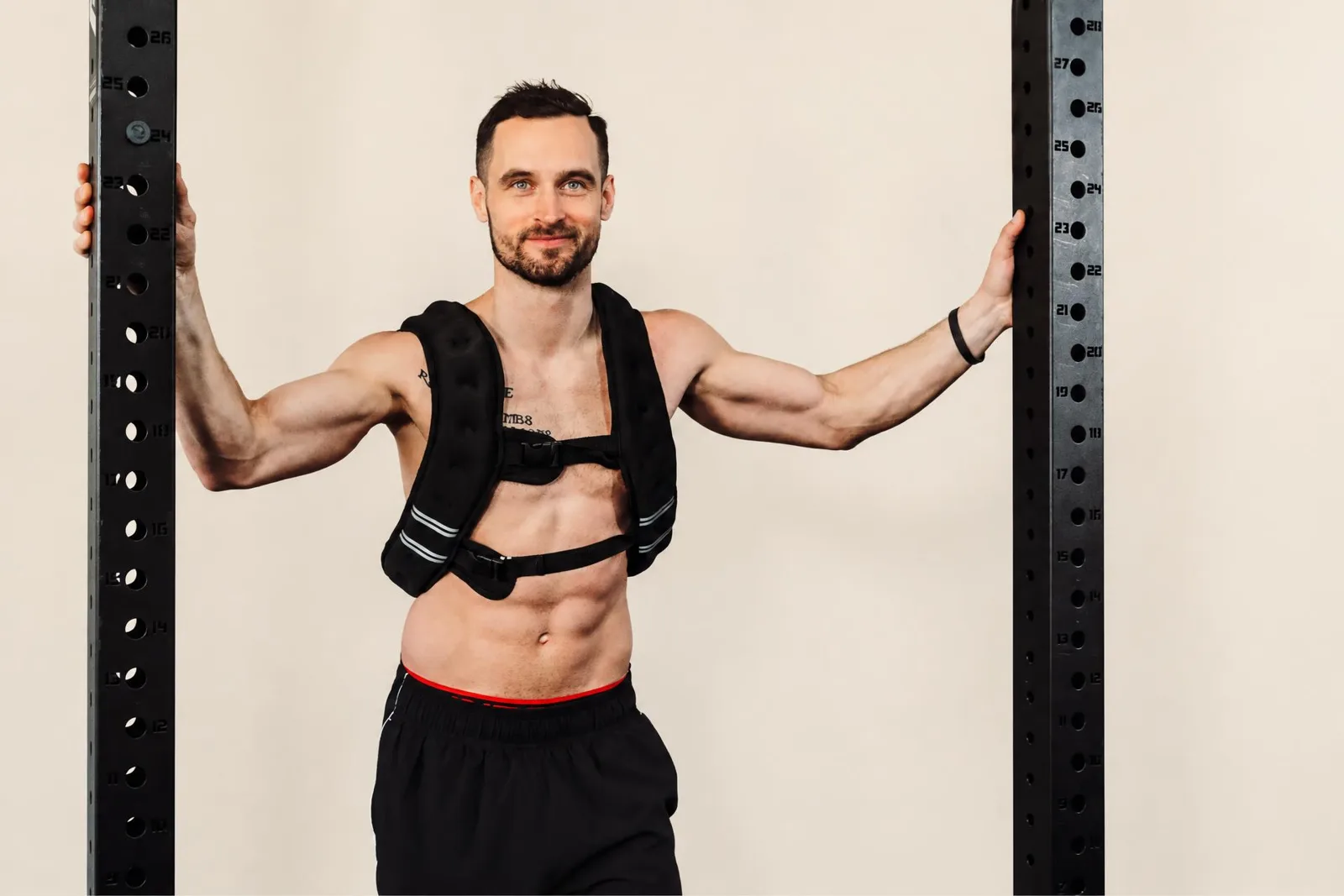
The vest is everywhere. Women walking the neighborhood in a 12 lb vest, influencers rucking to coffee, parody videos with millions of views. One brand told The Philadelphia Inquirer its sales were up 60% from 2024, and another reported a 135% jump in a single year. The pitch is appealing: same walk, more calories, stronger bones, no gym needed.
Some of that holds up, and some doesn't. Adding weight does make walking more demanding. But the bone claims, the main reason many women buy a vest, are much less clear than the marketing suggests, and the newest research is more cautious than the hype.
We looked at the lab research on energy cost, the long-term bone studies (including a 5-year study in postmenopausal women and a 2025 randomized trial in older adults), and guidance from exercise physiologists on how to start. Below we cover what a vest actually does, what it doesn't, how heavy to go, how to stay safe, and how to fit it into a week with strength training.
What weighted vest walking does to your workout
This section covers the basics: what changes when you add load to a walk.
A weighted vest adds weight close to your center of mass, so your legs, hips and core have to carry more with every step. That raises the effort of a walk without changing your pace, which is why it appeals to people who don't want to run.
There's a long military tradition of carrying load on foot, now popularized as rucking. Rucking usually means a backpack with weight; a vest spreads the load around your torso instead. The basic effect is similar: more work at the same speed.
Does walking with a weighted vest burn more calories?
Yes, a little. Here's what the lab data shows.
Exercise physiologist Len Kravitz summarized the research in an article for the American College of Sports Medicine:
| Condition | Vest weight | Increase in energy use |
|---|---|---|
| Walking at 2.5 mph, untrained adults aged 18 to 55 | 15% of body weight | About 12% |
| Walking at 3.0 mph, healthy young adults | 20% of body weight | About 13% |
| Treadmill walking at a 5% to 10% incline | 10% of body weight | About 13% |
So a vest makes your walk somewhat harder, roughly in the range of 10% to 15% more energy. To put that in perspective: if a walk normally uses 200 calories, a vest might add 25 or so. That's real, but it's small, and it isn't a reason to change how much you eat.
Kravitz also noted that walking uphill with a lighter vest gave a similar boost to walking on the flat with a heavier one. If your knees or back don't love heavy loads, adding a gentle incline can do some of the same job.
Weighted vest bone density: what the research actually shows
This is the biggest claim, and the most important to get right.
The early study that started it
A study by Snow and colleagues, published in 2000 in the Journals of Gerontology, followed postmenopausal women for five years. Nine women did a program of jumping exercises while wearing a weighted vest (about 11 lb on average), three times a week for 32 weeks a year. Nine active women who didn't join the program served as a comparison group.
After five years, the exercisers had essentially maintained their hip bone density, while the comparison group lost about 3% to 4% at several hip sites. That's a meaningful difference. But notice what the program involved: jumping, not just walking. The study was also small and not randomized, with women choosing which group to be in.
The 2025 randomized trial
The best evidence so far comes from the INVEST in Bone Health trial, led by Kristen Beavers at Wake Forest University and published in JAMA Network Open in 2025. It followed 150 older adults with obesity, average age about 66, through 12 months of intentional weight loss. They were split into three groups:
- Weight loss alone
- Weight loss plus wearing a weighted vest daily (on average about 7 hours a day, replacing about 78% of the weight they lost)
- Weight loss plus resistance training
All three groups lost similar amounts of weight, and all three had similar, significant decreases in hip bone density. Neither the vest nor resistance training prevented bone loss during weight loss. The authors said these strategies "alone may not be enough," but also noted that vests may still help with things like strength and getting up from a chair.
The 2026 follow-up: you have to move
A 2026 analysis of the same trial, published in Frontiers in Aging and led by Jason Fanning, looked at how much time people spent standing or stepping. In the vest group, more time upright was linked to better bone outcomes. In the weight-loss-only group, the opposite was true. Fanning summed it up: "A vest can be a great tool. But, like any tool, it's not going to do the work for you."
What this means for you
- A vest worn while sitting around does very little for bone, because you're not carrying the load.
- Walking alone in a vest hasn't been shown to meaningfully increase bone density. Kravitz's review reached the same conclusion.
- The bone benefits seen in research came with more demanding loading, like jumping, or simply more time on your feet under load.
- These trials were in older or postmenopausal adults. There's very little research on vests in younger women.
Weighted vest vs strength training: which is better?
Short answer: they do different jobs, and strength training does more of the jobs most women buy a vest for.
| Goal | Weighted vest walking | Strength training |
|---|---|---|
| Make walks harder | Yes | No |
| Raise calorie burn a little | Yes (about 12% to 13%) | Yes, plus builds muscle |
| Build muscle | Minimal | Yes |
| Build strength | Some, especially for beginners | Yes, much more |
| Bone density | Not proven on its own | Part of the best-supported approach, especially heavy, progressive loading |
| Convenience | High, no gym needed | Can be done at home or a gym |
For context, the LIFTMOR trial (published in 2018 in the Journal of Bone and Mineral Research) had postmenopausal women with low bone mass do supervised heavy resistance and impact training, twice a week for 8 months. Their spine bone density rose by about 2.9%, while the control group's fell. That's the kind of loading bones respond to, and it's far heavier than a walking vest.
The 2026 resistance training guidelines from the American College of Sports Medicine recommend training all major muscle groups at least twice a week. A vest can be a nice addition, but it doesn't check that box.
How heavy should a weighted vest be?
This section gives you a starting point. These are expert recommendations, not tested prescriptions.
Kravitz suggests:
- Start at about 5% of your body weight.
- Work up gradually toward 10% to 20% over time, if you want to.
- Start with short sessions, around 10 minutes of vest walking, then slowly add time.
- For incline walking, build a base at 5% for several sessions before going to 10%.
Quick reference
| Body weight | 5% (starting point) | 10% | 20% |
|---|---|---|---|
| 120 lb | 6 lb | 12 lb | 24 lb |
| 140 lb | 7 lb | 14 lb | 28 lb |
| 160 lb | 8 lb | 16 lb | 32 lb |
| 180 lb | 9 lb | 18 lb | 36 lb |
Most people don't need to go near 20%. An adjustable vest lets you start light and add weight in small steps, which is usually the most practical choice.
What to look for in a vest
- Even weight distribution around your torso, front and back
- Padding and breathable fabric
- Secure, adjustable straps so it doesn't bounce
- A snug fit that doesn't restrict breathing
Weighted vest safety: who should be careful
Adding load to your spine and joints isn't right for everyone. This block covers who should check first.
- Wear it to walk, not all day. Kravitz warns that wearing a vest throughout the day, with constant twisting and turning, may risk muscle strain or joint problems.
- Watch your posture. If you start leaning forward, shortening your stride or feeling pain in your back, hips or knees, the vest is too heavy or you've gone too long.
- Osteoporosis or low bone density: talk to your doctor before adding load. A vest isn't a treatment, and some people need individualized guidance on what loads are safe.
- Pregnancy or postpartum: talk to your doctor or a pelvic health physiotherapist first.
- Pelvic floor symptoms (leaking, heaviness or pressure): adding load can make these worse for some women. A pelvic health physio can help you decide whether and how to use one.
- Back, hip or knee pain, or a recent injury: get it checked before adding weight.
- Heart or lung conditions: a vest raises effort and heart rate, so check with your doctor.
Stop and get help right away if you have chest pain, unusual shortness of breath or feel faint.
Put it together: your week
Here's how to fit vest walking into a week that also covers strength, food, sleep and energy.
A sample week
| Day | Session |
|---|---|
| Monday | Strength training, full body |
| Tuesday | 20 to 30 minute vest walk at an easy to moderate pace |
| Wednesday | Rest or an easy walk without the vest |
| Thursday | Strength training, full body |
| Friday | 20 to 30 minute vest walk, add a gentle hill if you can |
| Weekend | A longer walk without the vest, or rest |
How to connect it to the rest of your day
- Strength first. Two full-body strength sessions a week do more for muscle and bone than any amount of vest walking.
- Keep vest walks off heavy leg days if you can. Doing them the day after a hard lower-body session usually feels better. This is common coaching advice, not a research finding.
- Check your energy. If you slept badly or feel run down, leave the vest at home and walk without it.
- Eat normally. The extra calories a vest burns are small, so there's no need to "make up for" or change your meals. Protein at each meal supports the strength work that does most of the heavy lifting.
- Track it. Note the vest weight, time and how it felt. Add weight or time only when a session feels easy.
Frequently asked questions
Does weighted vest walking work?
It makes walking harder and burns a bit more energy, about 12% to 13% more in lab studies with a vest of 10% to 20% of body weight. It hasn't been shown to reliably protect or build bone on its own. It works best as an addition to strength training, not a replacement.
Does a weighted vest help bone density?
The evidence is mixed. A small 5-year study found women who did jumping exercises in a vest maintained hip bone density, but a 2025 randomized trial found daily vest use didn't prevent hip bone loss in older adults losing weight. Moving more while wearing the vest may matter.
How heavy should my weighted vest be?
Many experts suggest starting at about 5% of your body weight and building toward 10% to 20% over time. For a 140 lb woman, that means starting around 7 lb. Increase slowly, and stop if your posture or comfort changes.
Is rucking the same as weighted vest walking?
They're similar. Rucking usually means walking with a weighted backpack, while a vest spreads the load around your torso. Both make walking harder at the same pace.
Can I wear a weighted vest all day?
It's not recommended. Wearing a vest throughout the day, especially with lots of twisting and turning, may raise the risk of muscle or joint strain. Save it for planned walks.
Is a weighted vest safe if I have osteoporosis?
Talk to your doctor first. A vest isn't a treatment for osteoporosis, and people with low bone density may need individualized advice about safe loads and exercise.
Conclusion
Weighted vest walking is a reasonable way to make your walks a bit harder and burn a little more energy. But the bone claims behind much of the trend are weaker than they sound: the strongest recent trial found daily vest use didn't prevent hip bone loss on its own, and the benefit seems to depend on actually moving under load.
If you enjoy it, keep it. Start around 5% of your body weight, wear it only for walks, build up slowly, and check with your doctor if you have bone, pelvic floor or joint concerns. Most importantly, keep two strength sessions a week as your foundation. That's where the bigger gains in muscle and bone come from.
This article is for general education and isn't medical advice.
If you want help putting this into your own week, Wellio is an AI coach that sees the whole picture: it builds your plan around your workouts, meals, sleep and energy, and guides you day by day as life changes. Connect Apple Health to bring in your steps and walks, and get strength sessions planned around them. Join the Wellio waitlist.
Sources
- Beavers KM, et al. Weighted Vest Use or Resistance Exercise to Offset Weight Loss-Associated Bone Loss in Older Adults. JAMA Network Open, 2025 (Wake Forest news release via EurekAlert).eurekalert.org
- Fanning J, et al. Analysis of time spent upright and bone density in the INVEST trial. Frontiers in Aging, 2026 (Wake Forest University news).news.wfu.edu
- Snow CM, et al. Long-term exercise using weighted vests prevents hip bone loss in postmenopausal women. Journals of Gerontology Series A, 2000.collections.lib.utah.edu
- Kravitz L. Article on weighted vest research and recommendations. American College of Sports Medicine (undated).acsm.org
- Watson SL, et al. High-intensity resistance and impact training improves bone mineral density and physical function in postmenopausal women with osteopenia and osteoporosis: the LIFTMOR randomized controlled trial. Journal of Bone and Mineral Research, 2018.academic.oup.com
- American College of Sports Medicine. 2026 resistance training position stand (press release via Newswise).newswise.com
- The Philadelphia Inquirer. Article on the weighted vest trend, October 2025.inquirer.com
Make it work
for your week.