Is Soreness a Sign
of a Good Workout?What DOMS Really Tells You
Sore for days, or not sore at all and worried it didn't work? Here's what soreness really tells you, what helps, and better ways to know your training is working.
 By Wellio
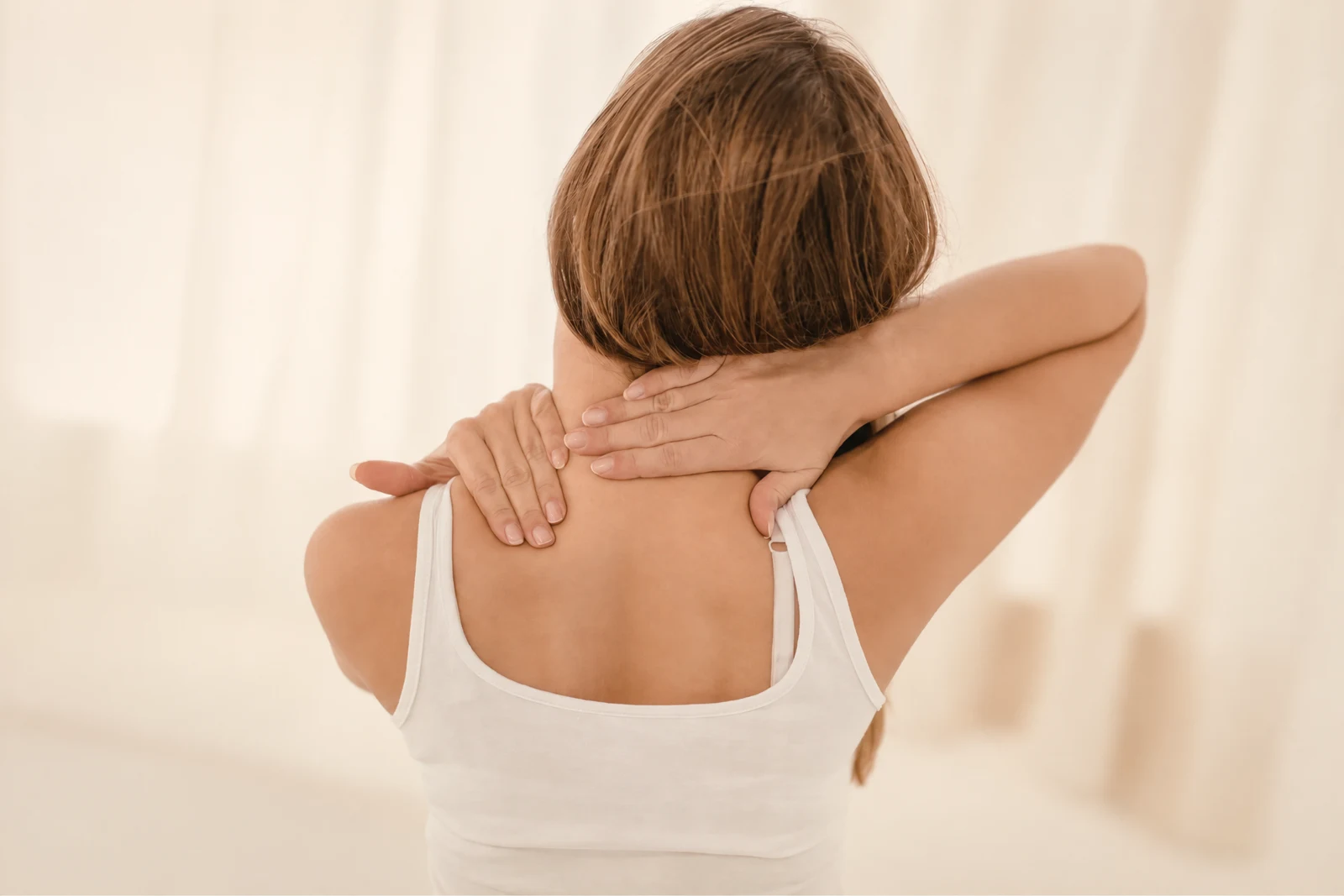
You finally pushed yourself in a new class or a heavy leg day, and two days later you can barely sit down. Part of you is proud: it must have worked. Then a few weeks later you do the same workout and feel almost nothing, and the worry starts. Am I not working hard enough? Did I stop making progress?
This is one of the most common beliefs in fitness: if it doesn't hurt the next day, it didn't count. It feels logical, and plenty of instructors repeat it. But the research tells a different story, and believing it can push you into workouts that make you more sore without making you stronger.
We went through the research on what soreness actually reflects, why it fades as you train, which recovery methods help, and how to tell normal soreness from an injury or something more serious. Below you'll find what DOMS is, what it does and doesn't say about your progress, what to do when you're sore, the warning signs to take seriously, and better ways to know your training is working.
What is DOMS (delayed onset muscle soreness)?
This section covers the basics: what the soreness is, when it shows up and what triggers it.
DOMS is the achy, stiff, tender feeling in your muscles that shows up a day or two after a workout, not during it. According to Cleveland Clinic, the pain usually starts one to three days after intense exercise, builds over several hours, and rarely lasts more than five days, often easing a little each day. Cedars-Sinai describes a similar pattern: it appears about 24 to 48 hours after unfamiliar or intense exercise, peaks within one to three days, then fades.
What causes it
DOMS is linked to small amounts of damage in muscle fibers and the repair process that follows. It's most likely after:
- A new activity or exercise your muscles aren't used to
- A workout that's harder or longer than usual
- Eccentric movements, where a muscle lengthens under tension: the lowering part of a squat, lunge, pull-up or bicep curl, walking or running downhill, and landing from jumps
That last point explains why a first lunge-heavy class or a new Romanian deadlift can leave you sorer than a familiar workout that felt harder at the time.
Is soreness a sign of a good workout? What the research says
This is the core question, and the evidence gives a clear answer.
A 2013 review in the Strength and Conditioning Journal by Brad Schoenfeld and Bret Contreras looked specifically at whether soreness after exercise is a valid sign of muscle adaptation. Their conclusion: soreness has limited use as a measure of workout quality or future muscle growth. Some of their reasons:
- Soreness doesn't measure how much muscle damage happened, or whether growth will follow.
- Some activities cause plenty of soreness without much muscle growth. Long endurance events like marathons and long rides are classic examples.
- Muscle growth can happen without much damage or soreness.
- Some muscles rarely get sore, yet still grow with consistent training.
The review also pointed out a downside to chasing soreness. Severe muscle damage can cut strength by 50% or more and slow recovery, which means your next few sessions may suffer. The authors suggested that some damage may play a role, but the "right" amount is unknown, and very high levels of pain are better treated as a warning sign than a goal.
Why you're not sore anymore (the repeated bout effect)
If you used to get sore and now don't, that's usually good news. This section explains why.
After a workout that causes muscle damage, your muscles adapt so the same workout causes less damage and soreness next time. This is called the repeated bout effect. Schoenfeld and Contreras noted that soreness fades as the same stimulus is repeated, even though muscle growth can continue.
The protection can last a surprisingly long time. A 2015 review in the Journal of Australian Strength and Conditioning by Bridgeman and colleagues reported that a low-intensity eccentric session protected against further damage for about three weeks, while hard eccentric sessions were reported to protect for up to six months.
What this means for you:
- Not being sore isn't a sign you've stopped progressing. It often means your body has adapted to the movements.
- The first week of any new program is usually the sorest. Expect it, and don't judge the program by it.
- Coming back after a break can bring soreness back, especially after several weeks off.
Why some muscles and exercises make you sorer
You might notice your glutes and hamstrings are sore for days while your shoulders barely notice anything. This section covers why.
Schoenfeld and Contreras highlighted two patterns:
- Some muscles are simply more prone to soreness than others, and this varies from person to person.
- Exercises that challenge a muscle in its stretched position tend to cause more soreness. Romanian deadlifts (hamstrings at the bottom), deep lunges and split squats (glutes and quads), and overhead triceps work are common examples.
This is one reason the same weekly plan might leave your legs sore and your upper body fine. It doesn't mean your upper body isn't working. It mostly reflects the movements and the muscles involved.
Ways to reduce soreness without reducing the quality of your training:
- Start new exercises with lighter weights and fewer sets, then build up over two to three weeks.
- Keep the same core exercises for several weeks so the repeated bout effect kicks in.
- Add new moves one or two at a time, not a whole new program at once.
What actually helps sore muscles
This section covers what research says about common recovery methods.
A 2018 systematic review and meta-analysis in Frontiers in Physiology by Dupuy and colleagues pooled 99 studies on recovery techniques used after exercise. Here's how they compared for reducing DOMS:
| Recovery method | Effect on soreness in the review |
|---|---|
| Massage | Largest reduction |
| Active recovery (light movement) | Moderate reduction |
| Compression garments | Moderate reduction |
| Cryotherapy (cold exposure) | Small to moderate reduction |
| Cold water immersion | Small to moderate reduction |
| Contrast water therapy (hot and cold) | Small reduction |
| Stretching | No significant effect |
| Electrical stimulation | No significant effect |
The authors concluded that massage seemed to be the most effective method for reducing DOMS and perceived fatigue. Two caveats: the review looked at single recovery sessions, so it's not clear how well repeated use works, and many of the included studies were small.
What about stretching?
Stretching is the most common thing people do for soreness, and it's the one with the least support. A Cochrane review by Herbert and colleagues, updated in 2011, pooled 12 randomized trials and found that stretching before or after exercise produced little to no reduction in soreness in the following week, regardless of when or how often people stretched. Stretch if you enjoy it or want to improve flexibility, but don't expect it to fix soreness.
Practical relief options
- Keep moving gently. A walk, easy cycling or light mobility work often helps stiff muscles feel better.
- Try massage or foam rolling if you have access and enjoy it.
- Use heat or cold based on what feels better. Cleveland Clinic lists both as options.
- Over-the-counter pain relievers like ibuprofen or acetaminophen may help occasionally. Follow the label and check with your doctor or pharmacist if you have other health conditions or take other medicines.
Should you work out when you're sore?
Usually yes, with a few adjustments. This section covers how to decide.
Mild to moderate soreness generally isn't a reason to skip training. Cedars-Sinai notes that gentle movement can ease stiffness and suggests light activity like walking, cycling or swimming over heavy lifting or high-intensity work when you're very sore.
A simple way to decide on the day:
| How sore you are | What to do |
|---|---|
| Mild stiffness that eases after warming up | Train as planned |
| Clearly sore, but movement feels okay after a warm-up | Train, but train different muscles, or go lighter on the sore ones |
| Very sore, movement is painful or your form changes | Do light cardio, walking or mobility, and save the hard session for later |
| Sharp pain, swelling, or pain that's getting worse | Stop and get it checked (see below) |
Training a different muscle group is an easy fix. If your legs are wrecked from Monday, an upper-body session on Wednesday usually feels fine. How many full rest days you need each week is a separate question, but most people do well with at least one or two.
Soreness vs injury: when to see a doctor
Most soreness is harmless. But some pain is a sign of injury, and rarely, extreme soreness can signal a serious condition. This section helps you tell them apart.
Normal soreness vs injury
| Normal DOMS | Possible injury | |
|---|---|---|
| When it starts | A day or two after training | Suddenly, during a specific movement |
| How it feels | Dull, achy, tender, stiff | Sharp, stabbing, or in one specific spot |
| Over time | Improves a little each day | Stays the same or gets worse |
| Movement | Stiff at first, eases as you warm up | Hurts more as you move, or limits movement |
Cedars-Sinai points out that injury pain often stays the same or worsens, while DOMS gradually improves. If pain doesn't resolve or keeps getting worse, see a healthcare provider.
Rhabdomyolysis: rare, but serious
Rhabdomyolysis ("rhabdo") is a breakdown of muscle tissue that can harm the kidneys. It's rare after normal training, but it has been linked to very intense or unfamiliar workouts. According to the CDC's National Institute for Occupational Safety and Health, signs include:
- Muscle pain, cramps or aches that are more severe than expected
- Dark, tea-colored or cola-colored urine
- Feeling weak or tired, or being unable to finish a workout you could normally do
Symptoms can start hours or even several days after the workout. If you notice any of these, get medical care right away. A blood test for creatine kinase is used to diagnose it.
See a doctor if
Cleveland Clinic recommends seeing a provider if:
- Pain lasts more than a week, or feels sharp and constant
- There's severe swelling around a muscle
- You have dark or bloody urine
- You have severe pain, can't move or use a body part, or get significant soreness after most workouts
How to tell your training is working (without soreness)
If soreness isn't the scoreboard, what is? This section gives you better signals.
- Your weights or reps go up. Lifting a little more, or doing an extra rep or two at the same weight, is the clearest sign of progress.
- The same workout feels easier. Less effort for the same session means you've adapted.
- Your form and control improve. Smoother reps, better depth and steadier balance count.
- You recover faster between sessions. Feeling ready to train again sooner is progress too.
- Measurements, photos or how clothes fit change over weeks, not days.
The simplest tool is a training log. Write down the exercise, weight, sets and reps for every session. Over four to six weeks, the log tells you far more about your progress than any amount of soreness.
Put it together: your week
Soreness connects to more than just training. Sleep, food and energy all affect how sore you feel and how fast you recover.
A week when you start something new
Say you start a new lifting program with two full-body sessions on Monday and Thursday.
- Monday: First session. Use lighter weights than you think you need and do one or two fewer sets on new exercises. Eat a protein-rich dinner.
- Tuesday: Expect some stiffness. Take a 20 to 30 minute walk to keep moving. Get to bed on time, since short sleep tends to make everything feel harder.
- Wednesday: Often the sorest day. Light cardio, mobility or a gentle class if you want to move. If you train, choose muscles that aren't sore.
- Thursday: Second session. If you're still very sore, keep the weights light on those muscles. Log everything.
- The following week: Repeat the same exercises. You'll likely notice much less soreness, which is the repeated bout effect at work, not a sign you're doing less.
Habits that support recovery
- Eat enough protein, spread across meals. Most women who lift do well with about 1.2 to 1.6 g per kg of body weight a day.
- Protect your sleep, especially in the first weeks of a new program.
- Match the session to your energy. On a low-energy, very sore day, swap a hard session for light movement and train hard the next day.
Frequently asked questions
Is soreness a sign of a good workout?
No. Soreness mainly shows that a workout was new, harder than usual, or heavy on lowering movements. Research reviews conclude it isn't a reliable sign of muscle growth, and muscles can grow with little soreness. Track your weights and reps to judge progress instead.
Why am I not sore anymore after working out?
Your muscles adapt after a workout so the same exercise causes less damage and soreness next time. This is called the repeated bout effect, and it can last weeks to months. It's normal and doesn't mean you've stopped making progress.
How long does DOMS last?
DOMS usually starts one to three days after a workout and rarely lasts more than five days, getting a little better each day. If pain lasts more than a week, feels sharp or keeps getting worse, see a healthcare provider.
Should I work out when I'm sore?
Usually, yes. Mild soreness that eases after a warm-up is fine to train through. If you're very sore, train different muscles or do light activity like walking. Stop if pain is sharp, getting worse, or changing how you move.
What helps sore muscles recover faster?
In a large meta-analysis, massage was the most effective method for reducing soreness, followed by active recovery and compression garments. Stretching had little effect. Gentle movement, sleep and time help most people.
When is muscle soreness dangerous?
Soreness that is far worse than expected, comes with dark tea- or cola-colored urine, severe swelling, or weakness that stops you from doing normal workouts can signal rhabdomyolysis or an injury. Seek medical care right away if you notice these signs.
Conclusion
So, is soreness a sign of a good workout? Not really. DOMS tells you a session was new or demanding, but it doesn't measure how much muscle you're building, and it naturally fades as your body adapts. Chasing soreness can even work against you by making your next few sessions weaker.
Instead, ease into new exercises, keep moving gently when you're sore, use massage or light activity if it helps, and save stretching for flexibility. Know the warning signs that mean you should see a doctor. And measure your progress where it actually shows: in your weights, your reps and how well you recover.
This article is for general education and isn't medical advice.
If you want help putting this into your own week, Wellio is an AI coach that sees the whole picture: it builds your plan around your workouts, meals, sleep and energy, and guides you day by day as life changes. Log your sets, reps and weights so your progress shows up in your log instead of your soreness, get suggestions for when to add weight, and ask the coach how to adjust when you're feeling sore. Join the Wellio waitlist.
Sources
- Schoenfeld BJ, Contreras B. Is Postexercise Muscle Soreness a Valid Indicator of Muscular Adaptations? Strength and Conditioning Journal, 2013 (summary by the Canadian Kinesiology Alliance).cka.ca
- Dupuy O, et al. An Evidence-Based Approach for Choosing Post-exercise Recovery Techniques to Reduce Markers of Muscle Damage, Soreness, Fatigue, and Inflammation: A Systematic Review With Meta-Analysis. Frontiers in Physiology, 2018.frontiersin.org
- Herbert RD, de Noronha M, Kamper SJ. Stretching to prevent or reduce muscle soreness after exercise. Cochrane Database of Systematic Reviews, 2011.cochranelibrary.com
- Bridgeman L, McGuigan M, Gill N. Eccentric exercise, exercise induced muscle damage and the repeated bout effect: a brief review. Journal of Australian Strength and Conditioning, 2015.pure.solent.ac.uk
- Cleveland Clinic. Delayed Onset Muscle Soreness (DOMS).my.clevelandclinic.org
- Cedars-Sinai. What Is Delayed Onset Muscle Soreness?cedars-sinai.org
- CDC, National Institute for Occupational Safety and Health. Signs and Symptoms of Rhabdomyolysis.cdc.gov
Make it work
for your week.