How Much Protein Do I
Need to Build Muscle?A Practical Guide for Women Who Lift
60 g, 1 g per pound, two shakes a day? Here's what the research actually supports, how to find your own number, and what it looks like on a plate.
 By Wellio
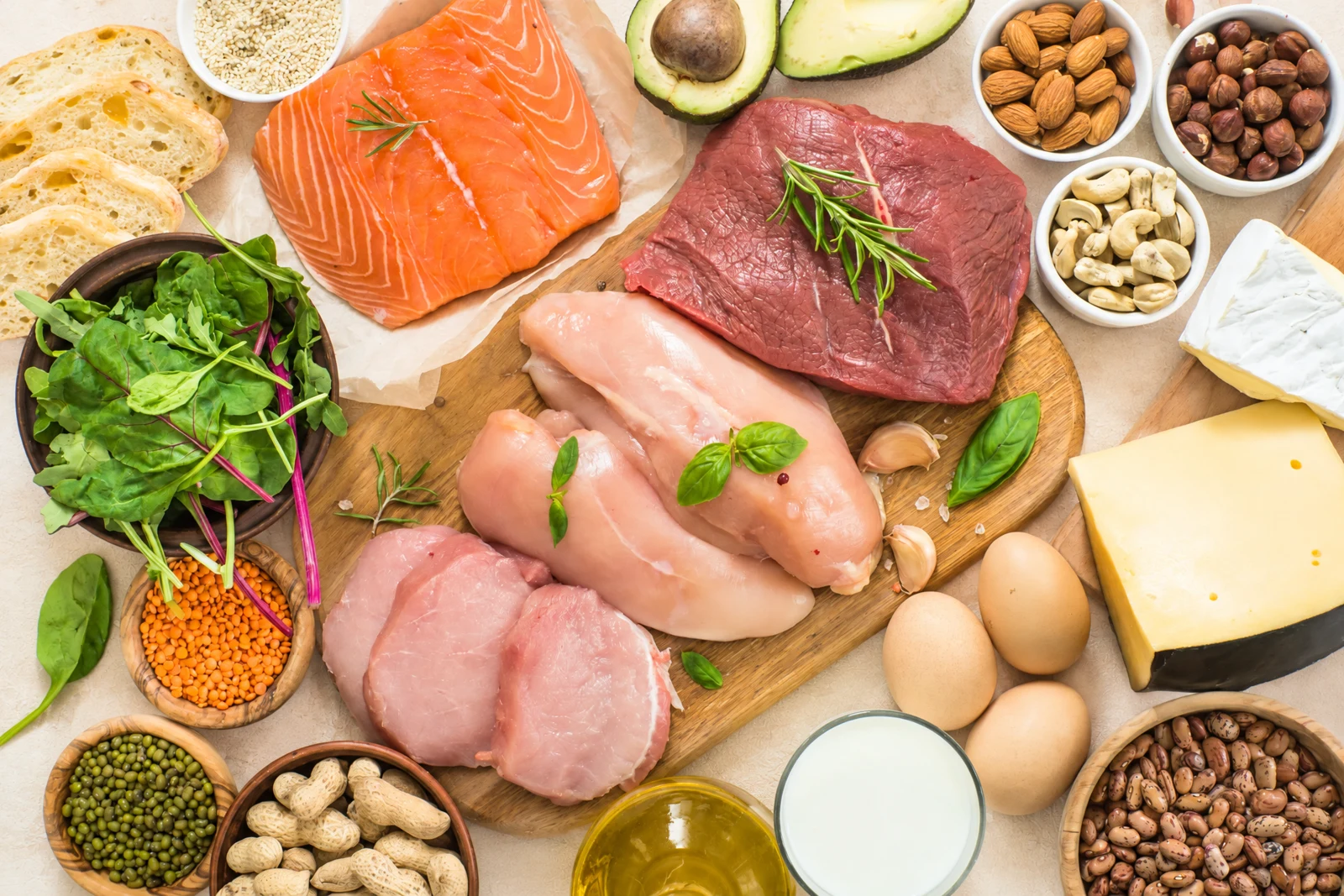
You've started lifting, and everyone seems to have an opinion about protein. One app says 60 g, a coach on Instagram says 1 g per pound, your friend drinks two shakes a day. You've heard you "need more protein to see results," but nobody explains how much, or how to actually eat that much without living on chicken breast.
Here's the good news: the research on this is more settled than the internet makes it look, and the target is probably more reachable than you think. It also doesn't require counting every gram forever.
We pulled together the main evidence: a large 2018 meta-analysis on protein and muscle gain, the International Society of Sports Nutrition's position stand, the new 2025 to 2030 Dietary Guidelines for Americans, and research on per-meal amounts, plant protein and safety. Below you'll find what the numbers actually mean, a simple way to calculate your target, how much to eat per meal, the best protein foods with real serving sizes, sample days for omnivores and vegetarians, whether you need powder, and whether too much is a problem.
How much protein do I need to build muscle? The numbers explained
There are several official-looking numbers floating around. They don't conflict; they answer different questions.
| Number | Where it comes from | What it's for |
|---|---|---|
| 0.8 g/kg per day | US Recommended Dietary Allowance (RDA) | The minimum to prevent deficiency in healthy adults. About 46 g a day for a reference 57 kg (126 lb) woman |
| 1.2 to 1.6 g/kg per day | 2025 to 2030 Dietary Guidelines for Americans | General healthy eating target for adults |
| About 1.6 g/kg per day | 2018 meta-analysis on protein and resistance training | The point where extra protein stopped adding muscle gains |
| 1.4 to 2.0 g/kg per day | International Society of Sports Nutrition (ISSN) | Range considered sufficient for most people who exercise |
What the research on muscle shows
The most cited study on this question is a 2018 meta-analysis in the British Journal of Sports Medicine by Morton and colleagues. It pooled 49 trials with 1,863 participants who did resistance training for at least six weeks, with and without extra protein. Adding protein led to modestly greater gains in strength and muscle, and those benefits plateaued at around 1.6 g/kg per day of total protein. Beyond that, extra protein didn't add more muscle on average.
The senior author, Stuart Phillips, summed it up with a useful caution: the effects of protein are real, "but the effects are not as big as some supplement companies would have you believe."
What the new US guidelines changed
The 2025 to 2030 Dietary Guidelines for Americans, released in January 2026, now recommend prioritizing protein at every meal and aiming for 1.2 to 1.6 g per kg of body weight daily, from both animal and plant foods. That's a big jump from the long-standing focus on the 0.8 g/kg RDA.
It's worth knowing the debate around this. A 2026 commentary in The Journal of Nutrition by a group of nutrition scientists pointed out that the new target was based mainly on research about weight management, not a full review of long-term health outcomes, and raised concerns about cost and access. So the guideline isn't the last word. But for women who lift, it lines up well with the muscle research above.
How to calculate your daily protein target
This block turns the research into a number you can actually use.
Step 1: Convert your weight to kilograms
Divide your weight in pounds by 2.2. For example, 140 lb ÷ 2.2 ≈ 64 kg.
Step 2: Multiply by 1.2 and 1.6
64 kg × 1.2 ≈ 76 g, and 64 kg × 1.6 ≈ 102 g. Your range is about 76 to 102 g a day.
Step 3: Pick where to start
- Start nearer 1.2 g/kg if you currently eat much less protein. Jumping straight to the top can feel like a lot.
- Aim nearer 1.6 g/kg if you train hard 3 or more times a week and building muscle is your main goal.
Quick reference by body weight
| Body weight | Daily protein at 1.2 g/kg | Daily protein at 1.6 g/kg |
|---|---|---|
| 120 lb (54 kg) | About 65 g | About 85 g |
| 140 lb (64 kg) | About 75 g | About 100 g |
| 160 lb (73 kg) | About 85 g | About 115 g |
| 180 lb (82 kg) | About 100 g | About 130 g |
| 200 lb (91 kg) | About 110 g | About 145 g |
These are starting estimates, not prescriptions. If you have a higher body weight and the number feels unrealistic, start at the lower end and build up. Some coaches base the target on a goal weight instead; if you're unsure, a registered dietitian can help you choose.
How much protein per meal?
Once you know your daily number, the next question is how to split it.
The ISSN position stand suggests about 0.25 g per kg of body weight per serving, or 20 to 40 g, spread across the day. For most women that works out to around 25 to 40 g per meal, three or four times a day.
There's some research specific to women too. A 2023 study in the Scandinavian Journal of Medicine & Science in Sports by Mallinson and colleagues gave 24 resistance-trained women 15, 30 or 60 g of whey protein after whole-body workouts. 30 g was the lowest dose that maximized the muscle-building response; 15 g didn't measurably increase it, and 60 g didn't do better than 30 g. It's one small study, so treat it as a helpful signal rather than a rule.
What this means in practice
- Front-load breakfast. Many people eat very little protein in the morning and try to catch up at dinner. A 25 to 30 g breakfast makes the daily target much easier.
- Don't stress about the exact timing around workouts. Total daily protein matters most. Having a protein-rich meal within a few hours before or after training is a reasonable habit, not a strict window.
- More than 40 g in one meal isn't "wasted." It still counts toward your day, but spreading it out is usually easier to eat.
The best protein foods (with real serving sizes)
This block gives you the numbers you need to plan meals. Values are approximate and vary by brand and preparation.
Animal protein foods
| Food | Serving | Protein |
|---|---|---|
| Chicken breast, cooked | 3 oz (85 g) | About 26 g |
| Salmon, cooked | 3 oz (85 g) | About 22 g |
| Canned light tuna | 3 oz (85 g) | About 22 g |
| Lean ground beef (95% lean), cooked | 3 oz (85 g) | About 18 g |
| Greek yogurt, plain, nonfat | 6 oz (170 g) | About 17 to 18 g |
| Cottage cheese, low-fat | 1 cup (226 g) | About 25 g |
| Eggs | 1 large | About 6 g |
| Milk, skim | 1 cup | About 8 g |
Plant protein foods
| Food | Serving | Protein |
|---|---|---|
| Firm tofu | ½ cup (126 g) | About 22 g |
| Tempeh | ½ cup (83 g) | About 17 g |
| Lentils, cooked | 1 cup (198 g) | About 18 g |
| Edamame | ½ cup | About 9 g |
| Black beans, cooked | ½ cup | About 8 g |
| Chickpeas, cooked | ½ cup | About 7 g |
| Peanut butter | 2 tbsp | About 7 g |
| Almonds | 1 oz (about 23 nuts) | About 6 g |
| Quinoa, cooked | 1 cup | About 8 g |
A quick takeaway from these tables: meat, fish, dairy, eggs, tofu and tempeh give you the most protein per serving. Beans, nuts and grains add up nicely but usually need to be combined with something else to reach 25 to 40 g in a meal.
Can you build muscle with plant protein?
Yes. This block covers what the research says if you eat little or no meat.
A 2018 meta-analysis in the International Journal of Sport Nutrition and Exercise Metabolism by Messina and colleagues pooled nine studies of people doing resistance training. Soy protein produced similar gains in strength and lean mass to whey and other animal proteins.
Plant-based eaters may need to be a little more intentional, because many plant foods have less protein per serving and come with more fiber, which makes them more filling. Practical tips:
- Make soy foods a regular anchor: tofu, tempeh, edamame and soy milk are some of the most protein-dense plant foods.
- Mix sources across the day: beans, lentils, grains, nuts and seeds together give you a broad mix of amino acids.
- Consider a plant protein powder if hitting your target with food alone is hard.
What 100 g of protein a day looks like
Here's how the numbers turn into real food. Both examples land close to the top of the range for a 140 lb woman.
Omnivore day (about 100 g)
| Meal | What you eat | Protein |
|---|---|---|
| Breakfast | 6 oz Greek yogurt with berries and 1 oz almonds | About 24 g |
| Lunch | Salad with 3 oz chicken and ½ cup chickpeas | About 33 g |
| Snack | ½ cup cottage cheese with fruit | About 12 g |
| Dinner | 3 oz salmon, 1 cup quinoa, vegetables | About 30 g |
| Total | About 99 g |
Vegetarian day (about 95 g)
| Meal | What you eat | Protein |
|---|---|---|
| Breakfast | 2 eggs scrambled, plus 6 oz Greek yogurt | About 30 g |
| Lunch | Lentil bowl: 1 cup lentils, ½ cup quinoa, vegetables | About 22 g |
| Snack | Apple with 2 tbsp peanut butter | About 7 g |
| Dinner | Stir-fry with ½ cup firm tofu, ½ cup edamame, ½ cup quinoa | About 35 g |
| Total | About 94 g |
The no-numbers version
If counting grams feels like too much, or makes eating stressful, skip it. A simpler rule that gets most women close to their target: include a palm-to-hand-sized portion of a protein-rich food at every meal, and a protein-containing snack on training days. That alone usually moves people from well below to within the range.
Do you need protein powder?
No, but it can be a useful tool. This block covers when it helps.
The 2018 Morton meta-analysis found protein supplements helped mainly because they raised total daily protein. A shake doesn't have special muscle-building powers beyond the protein it contains. If you already reach your target with food, powder adds little.
Powder is useful when:
- You struggle to reach your target with meals, especially on busy days.
- You don't eat much at breakfast and want an easy 20 to 30 g.
- You eat plant-based and want a convenient boost.
If you use one, look for a product that's been third-party tested for quality and contents. Whey, casein, soy and pea blends all work; choose based on taste, digestion and diet.
Is too much protein bad for you?
A common worry, especially about kidneys. Here's what the evidence says for healthy people.
A 2018 meta-analysis in The Journal of Nutrition by Devries and colleagues, covering 28 studies and more than 1,300 participants, found no evidence that higher-protein diets harmed kidney function in healthy adults. None of the participants had chronic kidney disease, so these results don't apply to people who do.
A few practical cautions still make sense:
- If you have kidney disease or another medical condition, talk to your doctor before increasing protein.
- More protein isn't more muscle. Above roughly 1.6 g/kg, extra protein didn't add muscle gains on average.
- Keep the rest of your plate balanced. Protein works best alongside enough total food, carbohydrates for training energy, fiber, fruits and vegetables.
- Eat enough overall. Building muscle is much harder if you're eating very little. If you're trying to lose fat, keep cuts modest and protein steady, and get professional guidance if you're unsure.
Put it together: your week
Protein is one part of building muscle. Training, sleep and energy decide how well you use it. Here's how to connect them.
- Training days: Keep your usual meals, add a protein-rich snack before or after your session, and make sure you've eaten in the few hours before lifting so you have energy to train.
- Rest days: Keep protein about the same. Muscle repair happens over the following days, not just in the hour after a workout.
- After a bad night's sleep: Hunger often goes up after short sleep. Build each meal around protein so you feel full and don't run on snacks all day.
- Busy days: Keep two or three easy options on hand, such as Greek yogurt, eggs, canned tuna, tofu or a protein shake.
- Check progress after 4 to 6 weeks: Are your lifts going up, and do you recover well between sessions? If yes, your protein is probably doing its job. If you're often hungry, low on energy or not progressing, look at total food and sleep before adding more protein.
A simple weekly rhythm: plan 3 or 4 protein anchors for the week (for example, a pack of chicken, a tub of Greek yogurt, a block of tofu, a dozen eggs), and build most meals around them.
Frequently asked questions
How much protein do I need to build muscle as a woman?
Most women who lift do well with about 1.2 to 1.6 g of protein per kg of body weight per day, or roughly 0.55 to 0.7 g per pound. A large meta-analysis found muscle gains leveled off around 1.6 g/kg, so going much higher usually doesn't add more.
Is 1 gram of protein per pound too much?
It's more than most people need for muscle gain. One gram per pound is about 2.2 g/kg, above the 1.6 g/kg point where research found benefits leveled off. It isn't harmful for healthy people, but it's often hard to eat and unnecessary.
How much protein should I eat per meal?
About 25 to 40 g, three or four times a day. The ISSN suggests 20 to 40 g per serving, and a small study in resistance-trained women found 30 g after training maximized the muscle-building response.
Do I need protein on rest days?
Yes. Muscle repair continues for a day or more after training, so keep your protein intake roughly the same on rest days and training days.
Is plant protein as good as animal protein for building muscle?
It can be. A meta-analysis found soy protein produced similar gains in strength and lean mass to whey and other animal proteins. Plant eaters may need larger portions or more combinations of foods to reach the same total.
Is a high-protein diet bad for your kidneys?
Not for healthy people, according to a meta-analysis of 28 studies. If you have kidney disease or another medical condition, check with your doctor before increasing protein.
Conclusion
So, how much protein do you need to build muscle? For most women who lift, about 1.2 to 1.6 g per kg of body weight a day: around 75 to 100 g for a 140 lb woman. Split it into 3 or 4 meals of 25 to 40 g, build each one around a protein anchor, and use powder only if it helps fill gaps.
Protein supports your training, but it doesn't replace it. Consistent lifting, enough total food and good sleep do the heavy lifting. Get those working together, give it a few weeks, and let your logbook tell you whether it's paying off.
This article is for general education and isn't medical advice.
If you want help putting this into your own week, Wellio is an AI coach that sees the whole picture: it builds your plan around your workouts, meals, sleep and energy, and guides you day by day as life changes. Log a meal by photo, voice or text to get an estimate of its protein, and choose daily targets or simple no-numbers guidance, whichever suits you. Join the Wellio waitlist.
Sources
- Morton RW, et al. A systematic review, meta-analysis and meta-regression of the effect of protein supplementation on resistance training-induced gains in muscle mass and strength in healthy adults. British Journal of Sports Medicine, 2018.bjsm.bmj.com
- McMaster University. How to build whey more muscle (news release on Morton et al.), 2018.news.mcmaster.ca
- Jäger R, et al. International Society of Sports Nutrition Position Stand: protein and exercise. Journal of the International Society of Sports Nutrition, 2017.cdr.lib.unc.edu
- American Academy of Family Physicians. Dietary Guidelines for 2025 to 2030: Recommendations From the USDA and HHS. American Family Physician, 2026.aafp.org
- Pasiakos SM, et al. Perspectives on the Protein Recommendations in the 2025 to 2030 Dietary Guidelines for Americans. The Journal of Nutrition, 2026.sciencedirect.com
- National Academies of Sciences, Engineering, and Medicine. Dietary Reference Intakes for protein.nationalacademies.org
- Mallinson JE, et al. Study of 15, 30 and 60 g whey protein doses after resistance exercise in trained women. Scandinavian Journal of Medicine & Science in Sports, 2023 (study summary).nestlemedicalhub.com
- Messina M, et al. No difference between the effects of supplementing with soy protein versus animal protein on gains in muscle mass and strength in response to resistance exercise. International Journal of Sport Nutrition and Exercise Metabolism, 2018.asu.elsevierpure.com
- Devries MC, et al. Changes in kidney function do not differ between healthy adults consuming higher- compared with lower- or normal-protein diets. The Journal of Nutrition, 2018 (McMaster news release).news.mcmaster.ca
- Food values: USDA FoodData Central via Nutrition Advance.nutritionadvance.com
- Today's Dietitian. Protein Content of Foods.assets.todaysdietitian.com
Make it work
for your week.