How Long to Rest
Between SetsFor Strength and Muscle Growth
How long to rest between sets for muscle growth and strength: what the research says, how rest changes by exercise, and what to do when you're short on time.
 By Wellio
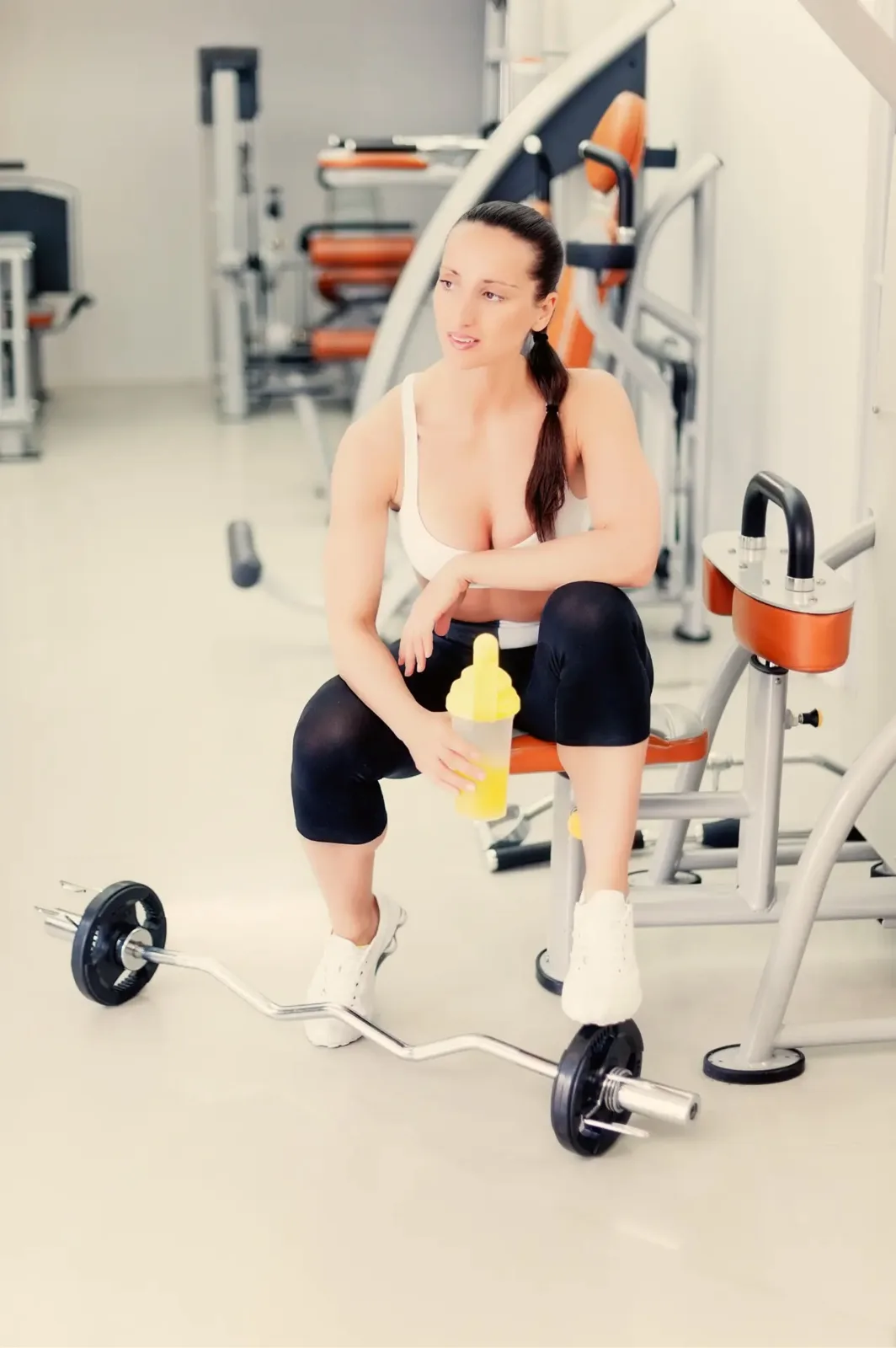
You finish a set of squats, check your phone, and wonder: am I supposed to go again now? Your friend in your old class never rested at all. A coach online says 30 seconds keeps your heart rate up. Someone else at the gym seems to sit on the bench for five minutes between every set.
Rest feels like the least important part of a workout, but it changes what you can actually lift. Rest too little and your second and third sets fall apart, so you lift less in total. Rest far too long and an hour disappears without much extra benefit.
We went through the main research on rest periods: a controlled trial comparing 1 and 3 minutes, systematic reviews on rest for strength and for muscle growth, a 2024 meta-analysis, and newer studies from 2025. Below we cover what the evidence says for muscle growth and for strength, why big lifts need more rest than small ones, how to save time without hurting your results, what to do while you rest, and a simple rest guide you can use today.
What happens during rest between sets
When you lift hard, your muscles use up the fast energy they rely on for short, intense efforts, and fatigue builds in both the muscle and your nervous system. Resting lets much of that recover, so you can lift a similar weight for a similar number of reps on the next set.
That's the key idea behind almost all of the research below: rest mostly matters because of how much total work it lets you do. If short rest means your reps drop from 10 to 7 to 5 across three sets, you've done far less work than with longer rest, where you might manage 10, 9 and 9.
You can see this clearly in a 2025 study in the Journal of Strength and Conditioning Research. Thirteen trained men did five sets of bench press and squat at 85% of their max. With 8 minutes of rest, they lifted about 30% more total bench volume and 24% more squat volume than with 4 minutes. That's an extreme example with very heavy loads, but it shows the pattern: more rest, more total work, up to a point.
How long to rest between sets for muscle growth
This is the question most women who lift are asking. Here's what the main studies found.
The 1 minute vs 3 minute trial
In a 2016 study in the Journal of Strength and Conditioning Research, Schoenfeld and colleagues split 21 resistance-trained men into two groups. Both did the same full-body program three times a week for 8 weeks: 7 exercises, 3 sets of 8 to 12 reps. The only difference was rest: 1 minute or 3 minutes.
The 3-minute group gained more muscle thickness in the front of the thigh, and showed a trend toward more growth in the triceps. They also gained more strength in the squat and bench press. Muscular endurance improved equally in both groups.
It's a small study of trained men, so it isn't the final word. But it was one of the first to challenge the old advice that short rest is best for muscle growth.
The reviews
A 2017 systematic review in the European Journal of Sport Science (Grgic and colleagues) looked at six studies comparing short rest (60 seconds or less) with longer rest. The findings were inconsistent. Both short and long rest built muscle, with a possible advantage for longer rest in trained people.
A 2024 Bayesian meta-analysis in Frontiers in Sports and Active Living by Singer and colleagues pooled nine studies. Resting longer than 60 seconds showed a small, uncertain advantage for muscle growth, and resting beyond about 90 seconds showed no meaningful extra benefit. Most participants were young, untrained men in short studies of 5 to 10 weeks, and the authors described the evidence as still unsettled.
A 2025 meta-analysis posted on medRxiv (Davidson and Barillas) looked only at trained men across six trials. It found almost no difference in muscle growth between rests under or over 60 seconds. It hasn't yet been peer reviewed, so treat it as preliminary.
What this means for you
Put together, the research points to a sensible middle ground. Very short rest probably costs you a little muscle growth, mostly because you do less work. Somewhere around 1.5 to 2 minutes seems to capture nearly all the benefit for most exercises. Resting much longer for muscle growth mainly costs time.
How long to rest between sets for strength
If your goal is to lift heavier, rest matters a bit more.
A 2018 systematic review in Sports Medicine by Grgic and colleagues pooled 23 studies with 491 participants (413 men and 78 women). Its conclusions:
- Trained lifters: rests longer than 2 minutes appeared necessary to get the most strength gains.
- Beginners: rests of about 60 to 120 seconds seemed to be enough.
- Everyone: the authors noted that people can still make solid strength gains even with short rests under 60 seconds.
The newer medRxiv analysis in trained men came to a similar conclusion: longer rest (over 60 seconds) was better for strength, even though muscle growth was similar.
Why the difference? Strength depends heavily on being able to produce near-maximal effort on each set. Heavy, low-rep sets on big lifts take more out of you, so they need more recovery for the next set to be just as strong.
Why big lifts need more rest than small ones
Not every exercise deserves the same rest.
Exercises that use lots of muscle and heavy weights, like squats, deadlifts, leg press, bench press and rows, create more overall fatigue than small exercises like biceps curls, lateral raises or triceps pushdowns. Researchers and coaches commonly suggest longer rest for multi-joint and lower-body exercises, though the direct comparisons between exercise types are limited.
A practical way to think about it:
| Exercise type | Examples | Suggested rest |
|---|---|---|
| Heavy compound lifts (low reps) | Squat, deadlift, bench press, hip thrust | 2 to 3+ minutes |
| Compound lifts (moderate reps) | Leg press, lat pulldown, rows, lunges | About 1.5 to 2 minutes |
| Isolation exercises | Curls, lateral raises, leg extensions, kickbacks | About 1 to 1.5 minutes |
| Core and carries | Planks, Pallof press, farmer's carry | About 1 minute |
The research gives the general ranges for muscle growth and strength. The split by exercise type is a common coaching convention built on the same idea: more fatigue, more rest.
Is 1 minute of rest enough?
This is one of the most common questions, so it gets its own answer.
For many exercises, especially isolation moves, 1 minute can be enough, and you'll still build muscle and strength. The research shows people make progress with short rest. The trade-off is that you'll often do fewer reps on later sets, and for heavy compound lifts, that drop can be big.
A simple test: if your reps fall a lot across sets with the same weight (say 10, then 7, then 5), you probably need more rest. If they stay close (10, 9, 9), your rest is fine.
If you do want to keep rest short, many coaches suggest making up for it by adding a set. A 2025 study in trained men found that alternating bench press and squat sets got close to the volume of very long rest while taking far less time, which is the logic behind pairing exercises.
How to save time without cutting rest too much
If the reason you rest less is a packed schedule, there's a better option than rushing.
Pair exercises
Instead of resting after every set, do a set of one exercise, then a set of another that uses different muscles, then rest briefly and repeat. While your legs recover, you train your upper body. This is how our 30 minute gym workout gives each muscle enough rest without standing around.
Good pairs:
- Squat or leg press with a row or lat pulldown
- Romanian deadlift with a chest press
- Lunges with a shoulder press
- Biceps curl with triceps pushdown
Rest longer on your first exercise only
Put your heaviest lift first and give it full rest. Use shorter rest or pairs for the smaller exercises later in the session.
Cut exercises, not rest
If you only have 40 minutes, it's usually better to do four exercises well than six exercises with no rest. Your weekly number of hard sets matters more than squeezing in extra exercises. Our guide to how many sets per week to build muscle explains how to count them.
What to do between sets
Rest doesn't have to mean scrolling.
- Write down your set. Note the weight and reps right away, so you know what to do next set and next session. Our guide to how to track your workouts has a simple template.
- Check how many reps you had left. Decide whether the next set should be the same weight, heavier or lighter.
- Breathe and stay loose. Walk around, shake out your arms or legs, and let your breathing settle.
- Stretch something that isn't working. Light mobility for other body parts is fine. Long static stretching of the muscle you just trained isn't necessary.
- Drink water. Especially in longer sessions or a warm gym.
- Set a timer. Most people underestimate how long they've rested. A phone timer keeps you honest in both directions.
A simple rest guide you can use today
Here's everything above in one place. The research sets the ranges; the specific choices by situation are common coaching conventions.
| Your situation | How long to rest |
|---|---|
| Beginner, most exercises | 1 to 2 minutes |
| Building muscle, most exercises | About 1.5 to 2 minutes |
| Heavy main lift (squat, deadlift, bench, hip thrust) | 2 to 3+ minutes |
| Small isolation exercise | About 1 to 1.5 minutes |
| Paired exercises (different muscles) | 30 to 60 seconds between exercises, about 1 to 2 minutes between rounds |
| Reps dropping sharply across sets | Add 30 to 60 seconds |
| Short on time | Pair exercises or drop one exercise rather than cutting rest |
If you're unsure, start at 90 seconds for most exercises and 2 to 3 minutes for your heaviest lift, then adjust based on whether your reps hold up.
Put it together: your week
Rest between sets connects to the rest of your week more than it seems. Here's how.
- Training days: Plan rest into your session length. Three exercises with 3 sets and 2-minute rests take about 30 to 35 minutes including a warm-up, so a 45-minute session fits about four exercises.
- After a bad night's sleep: You may need a little more rest to keep your reps up, and that's fine. Keep the weights, take an extra 30 seconds, and skip max attempts.
- Low-energy days: If you're tired or underfed, sets feel harder and recovery between them is slower. Make sure you've eaten in the few hours before training.
- Busy weeks: Use paired exercises to keep the session short instead of rushing every set.
- Check your log: If your reps stay close across sets and your weights go up over weeks, your rest is doing its job.
Frequently asked questions
How long should I rest between sets to build muscle?
About 1.5 to 2 minutes for most exercises. A 2024 meta-analysis found a small benefit to resting longer than 60 seconds and little extra benefit past about 90 seconds. Heavy compound lifts may need a bit more.
How long should I rest between sets for strength?
Beginners can rest about 1 to 2 minutes. A 2018 systematic review found trained lifters needed more than 2 minutes to maximize strength gains, so rest 2 to 3 minutes or more on heavy main lifts as you get stronger.
Is 30 seconds of rest between sets enough?
For most strength training, 30 seconds is usually too short, because your reps will drop on later sets. It can work between two exercises that use different muscles, like a lower-body move paired with an upper-body move.
Should beginners rest less between sets?
Beginners often do well with 1 to 2 minutes, according to a 2018 systematic review. You don't need very long rests at first, but resting under a minute on big lifts usually means fewer reps on later sets.
Does resting longer between sets burn fewer calories?
A session with longer rest may burn slightly less per minute, but strength training isn't mainly about calories burned during the session. Longer rest lets you lift more, which supports strength and muscle over time.
What should I do between sets?
Log your set, decide whether the next one should be heavier or lighter, breathe and move around lightly, and drink some water. A timer helps you rest the right amount.
Conclusion
So, how long to rest between sets? For most exercises, about 1.5 to 2 minutes is the sweet spot for muscle growth, and heavy main lifts deserve 2 to 3 minutes or more, especially as you get stronger. Very short rests don't stop you from making progress, but they usually mean less total work, and that's what limits results.
When time is short, pair exercises or drop one rather than rushing every set. Use your rest to log what you did and decide the next set, and let your reps across sets tell you whether you're resting enough.
This article is for general education and isn't medical advice.
If you want help putting this into your own week, Wellio is an AI coach that sees the whole picture: it builds your plan around your workouts, meals, sleep and energy, and guides you day by day as life changes. Log your weights, sets and reps as you go, and get suggestions for when to add weight or reps. Join the Wellio waitlist.
Sources
- Schoenfeld BJ, Pope ZK, Benik FM, et al. Longer Interset Rest Periods Enhance Muscle Strength and Hypertrophy in Resistance-Trained Men. Journal of Strength and Conditioning Research, 2016bvbvf1.bib-bvb.de
- Grgic J, et al. The effects of short versus long inter-set rest intervals in resistance training on measures of muscle hypertrophy: A systematic review. European Journal of Sport Science, 2017iat.uni-leipzig.de
- Grgic J, et al. Effects of Rest Interval Duration in Resistance Training on Measures of Muscular Strength: A Systematic Review. Sports Medicine, 2018lida.sport-iat.de
- Singer A, et al. Give it a rest: a systematic review with Bayesian meta-analysis on the effect of inter-set rest interval duration on muscle hypertrophy. Frontiers in Sports and Active Living, 2024frontiersin.org
- Davidson L, Barillas S. Investigating the impact of less than or greater than 60 seconds of inter-set rest on muscle hypertrophy and strength in trained males: systematic review with meta-analysis. medRxiv preprint, 2025medrxiv.org
- Effects of Rest Interval Configuration Between Sets on Volume Load During Five Sets of Bench Press and Back Squat Exercise. Journal of Strength and Conditioning Research, 2025 (StrengthLog summary)strengthlog.com
- Stronger By Science. Rest times for muscle growthstrongerbyscience.com
Make it work
for your week.