13 High Protein
Breakfast IdeasYou Can Make in 10 Minutes
Coffee and a granola bar, then starving by 11? Here are 13 breakfasts with about 25 to 30 g of protein, from no-cook bowls to egg-free and make-ahead options.
 By Wellio
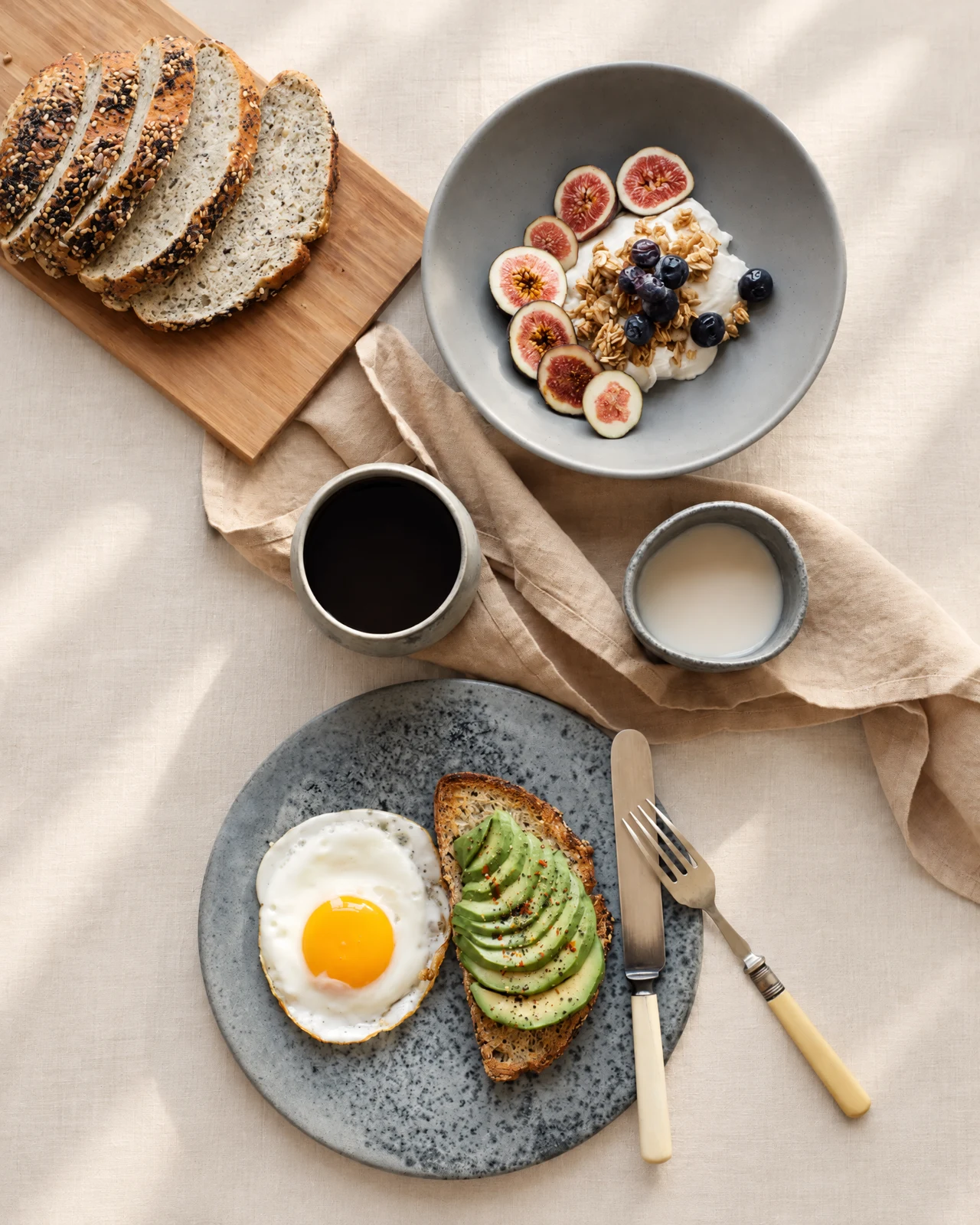
Build any breakfast around one protein anchor (Greek yogurt, cottage cheese, eggs, tofu, smoked salmon or a protein shake), then add fruit, oats or toast.
You know you "should" eat more protein. But mornings are chaos, and breakfast usually ends up being a coffee, a granola bar or a piece of toast eaten standing up. Most of us get our protein at dinner and almost none in the morning, then wonder why we're starving by 11 a.m. or why the daily number feels impossible to hit.
Breakfast is often the easiest place to fix that. The new 2025 to 2030 Dietary Guidelines for Americans recommend prioritizing protein at every meal, and the International Society of Sports Nutrition suggests about 20 to 40 g per serving for people who exercise. A breakfast in that range covers a big chunk of your day before you've left the house.
We built this list for real mornings. Every idea takes 10 minutes or less (or is made ahead), uses foods you can find in a normal grocery store, and lands around 25 to 35 g of protein. We calculated each one from USDA-based food data, so you can see exactly where the protein comes from. Below you'll find no-cook options, hot breakfasts, make-ahead ideas, egg-free and plant-based picks, a summary table, easy protein swaps, and a no-numbers version if you'd rather not count.
How much protein should a high protein breakfast have?
This section keeps the numbers short, so you can get to the food.
- Per meal: About 20 to 40 g, per the International Society of Sports Nutrition's protein position stand. For most women that means aiming for roughly 25 to 35 g at breakfast.
- Per day: The 2025 to 2030 Dietary Guidelines suggest 1.2 to 1.6 g per kg of body weight, spread across meals. For a 140 lb woman, that's about 75 to 100 g a day, so a 30 g breakfast covers roughly a third.
- Why 30 g comes up a lot: A 2023 study in the Scandinavian Journal of Medicine & Science in Sports gave 24 resistance-trained women 15, 30 or 60 g of whey protein after workouts. 30 g was the lowest dose that maximized the muscle-building response; 15 g didn't measurably raise it. It's one small study (and we read it through a summary page sponsored by Nestlé Health Science), so treat it as a helpful signal, not a rule.
If you want the full picture on daily targets, see our guide to how much protein you need to build muscle.
The protein building blocks (and how much each gives you)
Before the recipes, here's the cheat sheet we used. Values are approximate, based on USDA FoodData Central data and the Today's Dietitian protein chart, and vary by brand. Check labels when you can, especially for protein powder, soy milk and bread.
| Food | Serving | Protein |
|---|---|---|
| Greek yogurt, plain, nonfat | 6 oz (170 g) | About 18 g |
| Greek yogurt, plain, nonfat | 1 cup (8 oz) | About 24 g |
| Cottage cheese, low-fat | 1 cup | About 25 g |
| Egg | 1 large | About 6 g |
| Egg white | 1 large | About 3.6 g |
| Smoked salmon (lox) | 3 oz (85 g) | About 15.5 g |
| Cheddar cheese | 1 oz | About 6.6 g |
| Milk, skim | 1 cup | About 8 g |
| Soy milk | 1 cup | About 6 to 8 g (check label) |
| Firm tofu | ½ cup (126 g) | About 22 g |
| Black beans, cooked | ½ cup | About 8 g |
| Hummus | ¼ cup | About 5 g |
| Hemp seeds, hulled | 3 tbsp (30 g) | About 9.5 g |
| Chia seeds | 1 tbsp | About 2 g |
| Rolled oats, dry | ½ cup (40 g) | About 5 g |
| Peanut butter | 2 tbsp | About 7 g |
| Almonds | 1 oz | About 6 g |
| Whole-wheat bread | 1 slice | About 3 g |
| Protein powder | 1 scoop | Usually 20 to 25 g (check label; we use 20 g below) |
A pattern worth noticing: Greek yogurt, cottage cheese, eggs, tofu, smoked salmon and protein powder do most of the work. Oats, toast, seeds and nuts add up nicely, but they rarely get you to 25 g on their own.
No-cook high protein breakfasts (5 minutes)
For mornings when even turning on the stove feels like too much.
1. Greek yogurt power bowl (about 30 g)
- 1 cup plain Greek yogurt (about 24 g)
- 2 tbsp hemp seeds (about 6 g)
- Berries, a drizzle of honey or maple syrup, cinnamon
Stir and eat. Hemp seeds add protein and a nutty crunch without tasting "healthy."
2. Cottage cheese, fruit and almonds (about 31 g)
- 1 cup low-fat cottage cheese (about 25 g)
- 1 oz almonds, about 23 nuts (about 6 g)
- Pineapple, peaches or berries
If the texture of cottage cheese bothers you, blend it smooth first and treat it like a thick yogurt.
3. Smoked salmon toast (about 28 g)
- 2 slices whole-wheat toast (about 6 g)
- ¼ cup cottage cheese, spread like cream cheese (about 6 g)
- 3 oz smoked salmon (about 15.5 g)
- Cucumber, red onion, capers, black pepper
The toaster is the only "cooking" here. Smoked salmon is salty, so pair it with plenty of water and fresh veggies.
4. Milk and protein shake (about 31 g)
- 1 cup skim milk (about 8 g)
- 1 scoop protein powder (about 20 g)
- 1 tbsp peanut butter (about 3.5 g)
- 1 frozen banana, ice
Blend for 30 seconds. This is the fastest option on the list and easy to drink on the go.
Hot high protein breakfasts (10 minutes)
When you want something warm and filling.
5. Veggie egg scramble (about 32 g)
- 2 eggs (about 12 g)
- 3 egg whites (about 11 g)
- 1 oz shredded cheddar (about 6.6 g)
- 1 slice whole-wheat toast (about 3 g)
- Spinach, peppers, tomatoes or whatever's in the fridge
Mixing whole eggs with egg whites gets you more protein without needing five whole eggs. Carton egg whites save time; check the label for protein per serving.
6. Eggs and black beans (about 27 g)
- 2 eggs, fried or scrambled (about 12 g)
- ½ cup black beans, warmed (about 8 g)
- 1 oz cheddar (about 6.6 g)
- Salsa, avocado, hot sauce
Canned beans make this a 7-minute breakfast. Rinse them first to reduce sodium.
7. Protein oats (about 25 g)
- ½ cup rolled oats (about 5 g)
- 1 cup skim milk, instead of water (about 8 g)
- ½ scoop protein powder, stirred in after cooking (about 10 g)
- 1 tbsp chia seeds (about 2 g)
- Berries or a sliced banana
Cooking oats in milk instead of water adds about 8 g. Stir the protein powder in after the oats are off the heat so it doesn't clump. Without the powder, this bowl is only about 15 g, so it's worth adding.
8. Tofu scramble on toast (about 28 g, egg-free, plant-based)
- ½ cup firm tofu, crumbled (about 22 g)
- 2 slices whole-wheat toast (about 6 g)
- Turmeric, garlic powder, salt, pepper, spinach
Crumble the tofu into a hot pan with a little oil, season, and cook for about 5 minutes. Turmeric gives it a yellow "scrambled egg" color.
Make-ahead high protein breakfasts
Spend 15 minutes on Sunday and breakfast is handled for days.
9. Overnight oats with Greek yogurt (about 29 g)
- ½ cup rolled oats (about 5 g)
- 6 oz Greek yogurt (about 18 g)
- ½ cup skim milk (about 4 g)
- 1 tbsp chia seeds (about 2 g)
- Berries, cinnamon, a little maple syrup
Mix in a jar, refrigerate overnight, eat cold. Make 3 or 4 jars at once; they keep for a few days in the fridge.
10. Egg muffin cups (about 29 g per 3 cups)
- 6 eggs and 6 egg whites, whisked
- Chopped veggies, a little cheese if you like
- Makes 6 cups in a muffin tin; bake at 350°F for about 20 minutes
Three cups (3 eggs and 3 egg whites) give you about 29 g before any cheese. Reheat in the microwave for 30 to 45 seconds.
11. Chia pudding (about 22 g, or about 32 g with protein powder)
- 3 tbsp chia seeds (about 6 g)
- 1 cup soy milk (about 6 g)
- 2 tbsp hemp seeds (about 6 g)
- 1 tbsp peanut butter (about 3.5 g)
- Optional: ½ scoop protein powder (about 10 g)
Stir, refrigerate overnight, and top with fruit. Chia pudding on its own is a little lower in protein, so the powder is what takes it into the 30 g range.
High protein breakfast without eggs (and plant-based ideas)
Egg allergy, vegan, or just tired of eggs? These, plus the tofu scramble and chia pudding above, all skip eggs.
12. Black bean and hummus toast (about 28 g, vegan)
- 2 slices whole-wheat toast (about 6 g)
- ½ cup black beans, mashed (about 8 g)
- ¼ cup hummus (about 5 g)
- 3 tbsp hemp seeds, sprinkled on top (about 9.5 g)
- Lemon, chili flakes, tomato
A savory option that works as well at 7 a.m. as it does at lunch.
13. Soy milk protein smoothie (about 33 g, vegan with plant protein)
- 1 cup soy milk (about 6 g)
- 1 scoop plant protein powder (about 20 g)
- 2 tbsp peanut butter (about 7 g)
- Frozen berries or banana, a handful of spinach
Soy milk has much more protein than most other plant milks, so it's the best base for a plant-based shake. Check the label, since protein varies by brand.
Other egg-free picks on this list: the Greek yogurt bowl, cottage cheese bowl, smoked salmon toast, milk shake, protein oats and overnight oats.
All 13 high protein breakfasts at a glance
| # | Breakfast | Time | Protein | Egg-free | Vegetarian | Vegan |
|---|---|---|---|---|---|---|
| 1 | Greek yogurt power bowl | 3 min | About 30 g | Yes | Yes | No |
| 2 | Cottage cheese, fruit and almonds | 3 min | About 31 g | Yes | Yes | No |
| 3 | Smoked salmon toast | 5 min | About 28 g | Yes | No | No |
| 4 | Milk and protein shake | 2 min | About 31 g | Yes | Yes | No |
| 5 | Veggie egg scramble | 10 min | About 32 g | No | Yes | No |
| 6 | Eggs and black beans | 7 min | About 27 g | No | Yes | No |
| 7 | Protein oats | 7 min | About 25 g | Yes | Yes | No |
| 8 | Tofu scramble on toast | 8 min | About 28 g | Yes | Yes | Yes |
| 9 | Overnight oats with Greek yogurt | Make ahead | About 29 g | Yes | Yes | No |
| 10 | Egg muffin cups (3) | Make ahead | About 29 g | No | Yes | No |
| 11 | Chia pudding (with powder) | Make ahead | About 22 to 32 g | Yes | Yes | Yes, with plant powder |
| 12 | Black bean and hummus toast | 5 min | About 28 g | Yes | Yes | Yes |
| 13 | Soy milk protein smoothie | 2 min | About 33 g | Yes | Yes | Yes, with plant powder |
Protein totals are our own calculations from the food values above, rounded. Your numbers will vary with brands and portion sizes.
Easy swaps to add protein to the breakfast you already eat
You don't have to change everything. Small swaps add up quickly.
| Instead of | Try | Roughly adds |
|---|---|---|
| Regular yogurt | Plain Greek yogurt | Several grams more per serving (check labels) |
| Oats made with water | Oats made with 1 cup skim milk | About 8 g |
| Almond or oat milk in your shake | Soy milk or dairy milk | Several grams per cup (check labels) |
| Plain toast | Toast with ¼ cup cottage cheese or hummus | About 5 to 6 g |
| 2 whole eggs | 2 whole eggs plus 3 egg whites | About 11 g |
| Granola topping | 2 tbsp hemp seeds | About 6 g |
| Coffee alone | Coffee plus a 6 oz Greek yogurt on the side | About 18 g |
The no-numbers version
If counting grams feels like a chore, or makes eating stressful, skip it. A simple rule gets most people into the right range:
- Start with one palm-to-hand-sized portion of a protein anchor: a bowl of Greek yogurt or cottage cheese, 2 to 3 eggs, a deck-of-cards-sized piece of tofu or salmon, or a scoop of protein in a shake.
- Add something with fiber: fruit, oats, whole-grain toast or veggies.
- Add a little fat or crunch if you like: nuts, seeds, avocado, cheese.
That combination tends to land in the 25 to 35 g range without a calculator.
Portions here are starting points, not rules. Eat more if you're hungry, less if you're not, and adjust to your appetite and your day. If you have a medical condition (for example, kidney disease), food allergies or specific dietary needs, a registered dietitian can help you adapt these ideas safely.
Put it together: your week
Breakfast works best when it fits around your training, sleep and energy, not the other way around.
- Training mornings: If you lift early, a light option before (like the shake or Greek yogurt bowl) and a bigger breakfast after works well for many people. For details on timing, see our guide to what to eat before a morning workout.
- Rest days: Keep protein about the same. Muscle repair continues on the days you don't train.
- After a bad night's sleep: Hunger often runs higher after short sleep. A protein-rich breakfast can help you feel steadier through the morning instead of grazing on snacks.
- Busy weeks: Prep two make-ahead options on Sunday (for example, overnight oats and egg cups), so the hardest mornings are already handled.
A sample week
| Day | Breakfast | Notes |
|---|---|---|
| Monday | Overnight oats (prepped Sunday) | Lifting day; eat after training if you train early |
| Tuesday | Veggie egg scramble | Rest day; slower morning |
| Wednesday | Milk and protein shake | Early meeting; drink on the way |
| Thursday | Egg muffin cups (prepped Sunday) | Lifting day |
| Friday | Greek yogurt power bowl | Quick and no-cook |
| Saturday | Tofu scramble or eggs and beans | More time to cook |
| Sunday | Smoked salmon toast | Prep next week's oats and egg cups |
Notice that only two mornings involve real cooking. The rest are grab-and-go.
Frequently asked questions
What is a good high protein breakfast?
A good high protein breakfast has about 25 to 35 g of protein and is built around one anchor food, like Greek yogurt, cottage cheese, eggs, tofu, smoked salmon or a protein shake. Add fruit, oats or whole-grain toast for fiber and energy.
How can I get 30 g of protein at breakfast?
Easy combinations include 1 cup Greek yogurt with 2 tbsp hemp seeds (about 30 g), 1 cup cottage cheese with 1 oz almonds (about 31 g), or 2 eggs plus 3 egg whites with cheese and toast (about 32 g). A shake made with milk and one scoop of protein powder also lands around 30 g.
What is a high protein breakfast without eggs?
Try a Greek yogurt bowl, cottage cheese with fruit, smoked salmon toast, protein oats, overnight oats, a tofu scramble, black bean and hummus toast, or a protein smoothie. Most of these reach 25 to 30 g or more.
What's a good vegetarian or vegan high protein breakfast?
Vegetarian options include Greek yogurt bowls, cottage cheese, egg scrambles and overnight oats. For vegan breakfasts, tofu scrambles, black bean toast with hemp seeds, and soy milk smoothies with plant protein powder all reach about 28 to 33 g.
Is protein powder necessary for a high protein breakfast?
No. Most of the ideas on this list reach 25 to 30 g with whole foods. Protein powder is helpful for shakes, protein oats and chia pudding, or on very busy mornings, but it's a convenience, not a requirement.
Can I make high protein breakfasts ahead of time?
Yes. Overnight oats, egg muffin cups and chia pudding all keep in the fridge for a few days. Prepping two options on the weekend covers most busy mornings.
Conclusion
A high protein breakfast doesn't need to be complicated or take longer than your coffee. Start with one protein anchor (Greek yogurt, cottage cheese, eggs, tofu, smoked salmon or a shake), add fruit, oats or toast, and you'll land around 25 to 35 g in 10 minutes or less.
Pick two or three breakfasts from this list that you actually like, prep a couple on Sunday, and rotate them through the week. Covering a third of your daily protein before you leave the house makes the rest of the day much easier.
This article is for general education and isn't medical advice.
If you want help putting this into your own week, Wellio is an AI coach that sees the whole picture: it builds your plan around your workouts, meals, sleep and energy, and guides you day by day as life changes. Snap a photo of your breakfast, say what you ate or type it in to get an estimate of its protein, and choose daily targets or simple no-numbers guidance, whichever suits you. Join the Wellio waitlist.
Sources
- American Academy of Family Physicians. Dietary Guidelines for 2025 to 2030: Recommendations From the USDA and HHS. American Family Physician, 2026.aafp.org
- Jäger R, et al. International Society of Sports Nutrition Position Stand: protein and exercise. Journal of the International Society of Sports Nutrition, 2017.cdr.lib.unc.edu
- Mallinson JE, et al. Study of 15, 30 and 60 g whey protein doses after resistance exercise in trained women. Scandinavian Journal of Medicine & Science in Sports, 2023 (study summary by Nestlé Health Science).nestlemedicalhub.com
- Today's Dietitian. Protein Content of Foods.assets.todaysdietitian.com
- Nutrition Advance. Highest protein foods per 100 grams (USDA FoodData Central data).nutritionadvance.com
- USDA FoodData Central via GetFoodFacts: egg white, raw (FDC 172183).getfoodfacts.com
- USDA FoodData Central via GetFoodFacts: smoked chinook salmon, lox (FDC 171985).getfoodfacts.com
- USDA FoodData Central via GetFoodFacts: chia seeds, dried (FDC 170554).getfoodfacts.com
- USDA FoodData Central via GetFoodFacts: hemp seed, hulled (FDC 170148).getfoodfacts.com
- USDA FoodData Central via GetFoodFacts: oats, regular and quick, dry (FDC 173904).getfoodfacts.com
- USDA FoodData Central via GetFoodFacts: cheddar cheese (FDC 328637).getfoodfacts.com
- USDA FoodData Central via GetFoodFacts: hummus, commercial (FDC 174289).getfoodfacts.com
- USDA FoodData Central via Souper Sage: soy milk, fortified.soupersage.com
- University Hospitals Nutrition Facts: whole-wheat bread, 1 slice.uhhospitals.org
Make it work
for your week.